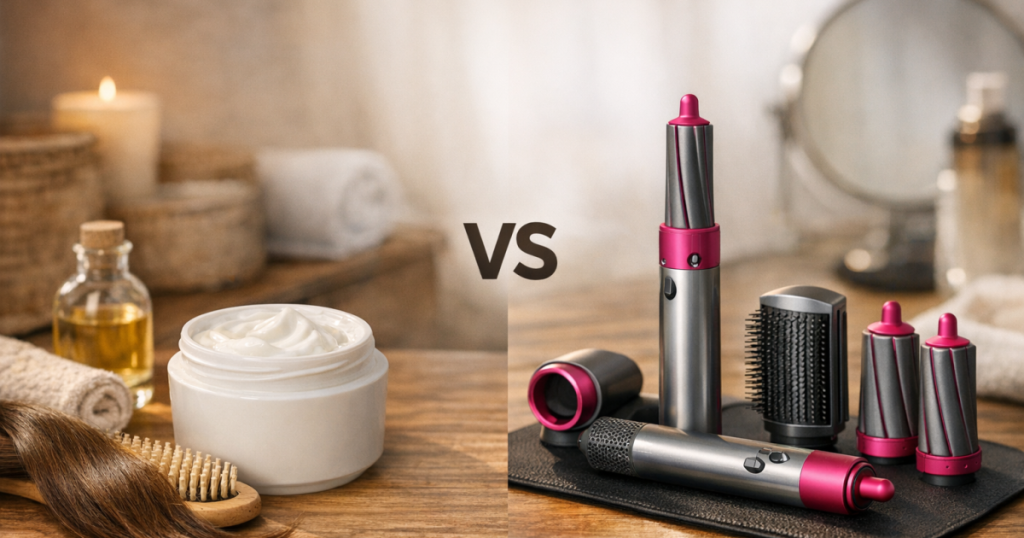
Choosing between a repair mask and a premium air styler sounds odd, but Elvive Total Repair 5 vs Dyson Airwrap is a real decision if your hair looks tired, fluffy or overworked and you are deciding where your money will make the biggest visible difference. One is a wash-day treatment aimed at improving the feel of damaged lengths; the other is a styling tool designed to dry, shape and smooth hair with air. They solve different problems, so the better choice depends on whether your issue starts in the hair fibre or in the styling routine.
The short version
If your hair feels rough, tangles easily, looks dull when air-dried or has been stressed by colour, brushing or frequent heat, start with L’Oréal Paris Elvive Total Repair 5 Hair Mask. It is the lower-commitment option and fits easily into a normal shower routine, although it will not create a polished blow-dry shape on its own.
If your hair is generally manageable but you struggle to create bounce, smoothness, movement or a salon-style finish at home, the Dyson Airwrap Co-anda2x Multi-styler and dryer is the more transformative upgrade. Before buying, check the exact UK bundle, included attachments and whether the barrel and brush options suit your hair length, density and preferred finish.
The cleanest answer: choose the mask for condition and softness; choose the Airwrap for styling control and finish. If your hair is both damaged and hard to style, repairing the routine first usually gives any tool a better chance of working well.
At a glance
- Main purpose: the L’Oréal mask supports smoother, softer-feeling lengths after washing; the Dyson Airwrap dries and styles hair into shape.
- Best visible change: the mask can improve slip, manageability and the look of dryness; the Airwrap can improve shape, volume, bend and blow-dry polish.
- Commitment level: the mask is a simple add-on to wash day; the Airwrap asks for technique, sectioning and a suitable prep routine.
- Hair-type fit: the mask is broadly useful for dry or damaged hair; the Airwrap is strongest when your hair can hold an air-styled bend or smooth finish.
- Biggest limitation: the mask cannot replace a styling tool; the Airwrap cannot repair compromised hair structure or compensate for poor conditioning.
- Best first buy for most people with breakage: the mask, plus gentler drying and detangling habits.
- Best upgrade for people who already have decent condition: the Airwrap, provided the attachment set matches your styling goals.
What each product is really competing on
L’Oréal Paris Elvive Total Repair 5 Hair Mask
This is a rinse-out hair mask for hair that feels damaged, weakened or dry. Its real job is not to permanently rebuild every strand, but to make hair feel better conditioned, easier to detangle and smoother after washing. That matters because many styling complaints begin before the tool comes out: rough ends catch on brushes, dehydrated lengths puff up, and damaged hair can lose its shape faster.
It suits a reader who wants a quick routine improvement without changing how they style. If your fringe splits because the roots are drying in different directions, the mask alone will not fix that. If your lengths look frizzy because they are dry and snaggy, it can help the finish look neater before you even reach for a dryer.
Dyson Airwrap Co-anda2x Multi-styler and dryer
The Dyson sits in a completely different lane. It is a styling system, not a treatment. Its value is in taking damp or prepared hair and shaping it with airflow, depending on the attachment and technique used. For many people, the appeal is a smoother blow-dry look, curved ends, loose waves or volume without relying on a traditional curling tong or straightener for every section.
The catch is that it rewards prep. Hair that is too wet, too dry, too product-heavy or too slippery may not behave as expected. Hair that has a weak cuticle or very dry ends may still look fuzzy, even if the shape is better. If you are unsure whether your problem is styling technique or the wrong tool category, it is worth reading about how to plan your finished style before choosing a hair tool before committing to a premium multi-styler.
Side-by-side: condition, finish and effort
- For softness: the L’Oréal mask has the advantage. It is designed to improve the feel of hair after rinsing, so it is the better match for rough lengths, crunchy ends and hair that feels difficult to comb.
- For shape: the Dyson has the advantage. A mask can make hair more pliable, but it will not create volume at the roots, flicked ends or smooth curved sections.
- For frizz: the answer depends on the cause. Dryness-related frizz points towards the mask; styling-related frizz, uneven drying or lack of tension points towards the Airwrap or another dryer-based tool.
- For damaged-looking hair: start with the mask if the hair looks dull even before styling. Consider the Airwrap if the hair looks acceptable after washing but loses polish during the drying stage.
- For speed: the mask adds time in the shower but little skill. The Airwrap can streamline styling once you learn it, but the first few uses may feel slower while you work out section size, dampness and hold.
- For travel and storage: the mask is easier to fit into a small routine. The Dyson is a tool system, so storage space and attachment organisation matter.
- For long-term routine value: the mask is a maintenance product you repurchase; the Dyson is a higher-cost tool purchase that needs regular use to justify the spend.
Which is better for your hair type?
Fine hair
Fine hair can benefit from a mask if the ends are dry, but heavy use may make roots or mid-lengths feel flat. Apply treatment mainly where the hair needs it and rinse thoroughly. The Airwrap can be more exciting for fine hair because it can add shape and movement, but hold is the issue to test. Fine, silky hair may need careful prep and a light styling product to keep waves or volume from dropping.
Thick hair
Thick hair often needs both conditioning and styling structure. The L’Oréal mask can help reduce roughness and make sectioning easier, which is useful before any blow-dry. The Dyson can give a polished finish, but thick hair may need smaller sections and more time. If your main frustration is that styling takes ages, check whether a multi-styler suits your density or whether a powerful dryer, heated rollers or a separate smoothing tool would be more efficient.
Wavy hair
For wavy hair, the mask is useful when waves look stringy, dry or undefined because the lengths lack slip. The Dyson is useful if you like a smooth, bouncy blow-dry rather than your natural wave pattern. If you want to preserve natural wave texture, compare attachment choices carefully because brush-based smoothing can stretch the pattern more than some readers expect.
Curly and coily hair
Curly and coily hair usually needs moisture, slip and careful detangling before styling tools make sense. The mask may be helpful as part of a conditioning routine, although the right fit depends on your porosity, product tolerance and whether your hair prefers richer or lighter formulas. The Dyson can smooth or shape, but it may not replace the tension, attachment type or drying approach you already rely on. For a broader breakdown, our guide to which tools fix different hair-type styling problems is a useful next step.
Bleached, coloured or heat-stressed hair
This is where the mask makes the strongest case. If your hair is colour-treated, porous or prone to snapping, improving wash-day conditioning and reducing mechanical stress should come before chasing a more elaborate tool routine. The Airwrap may still be preferable to using very hot tools every time you style, but it cannot make fragile ends robust. A gentler routine, less tugging and consistent conditioning will do more for the way damaged hair behaves.
When the L’Oréal mask is the smarter buy
Choose the mask first if your hair looks worse before you style it. That includes hair that feels straw-like after shampooing, tangles at the nape, catches on a brush, loses shine quickly or looks puffy even when left alone. Those signs suggest the surface of the hair needs more conditioning support before a styling upgrade will show its full effect.
The mask is also the better trial step if you are unsure whether your hair is genuinely hard to style or simply under-conditioned. A few wash days with better slip can change how your dryer, brush or heatless curlers perform. If nothing improves, you have learned that the issue may be technique, tool choice or haircut shape rather than basic condition.
It is not the right answer if your main goal is a specific look: curtain-bang bend, root lift, big curls, glossy blowout curves or controlled ends. A treatment can prepare the hair, but it cannot create architecture.
When the Dyson Airwrap is the better upgrade
Choose the Dyson if you are already happy with how your hair feels after washing but unhappy with the finished style. It is the stronger option for people who want a more controlled at-home blow-dry, soft bends, smoother lengths or a more polished everyday finish. It makes most sense if you currently use a dryer and round brush but struggle with coordination, or if you alternate between blow-drying and tonging and want a more consolidated styling routine.
The Airwrap is less convincing if you expect one pass to fix very coarse frizz, very resistant hair or hair that refuses to hold shape. It can still be useful, but expectations matter. The final result depends on dampness level, section size, product choice, attachment selection and how long your hair usually holds a style.
Before buying, verify the exact attachment bundle in the UK listing you are considering. Dyson sets can vary by edition and retailer, and the wrong attachment mix can make a premium purchase feel oddly incomplete for your actual routine.
Can you use both together?
Yes, and for many people this is the most realistic answer. Use the mask on wash days when your lengths feel dry or stressed, then style with the Airwrap when you want shape and polish. The mask can make the hair easier to detangle and smoother before drying, while the Airwrap provides the finish the mask cannot deliver.
The balance is important. Too much conditioning can make some hair types feel too soft or slippery to hold a curl. Too little conditioning can make styled hair look fuzzy. If your Airwrap results drop quickly, experiment with using the mask mainly on the ends rather than close to the roots, and keep your styling prep light enough that the hair still has some grip.
If your hair is already showing signs of heat fatigue, pair any styling routine with products and habits that support recovery. Our look at conditioner for heat-damaged hair may help you decide whether your wash routine needs strengthening before another tool purchase.
Main lessons before you choose
- Buy the L’Oréal mask first if your hair feels damaged, dry, knotty or rough before styling. It is the more sensible first move for condition-led problems.
- Buy the Dyson first if your hair condition is decent but your blow-dry lacks shape, bounce, smoothness or control.
- Do not expect the mask to style your hair. It can improve manageability, but it will not create curls, root lift or a blow-dry finish.
- Do not expect the Airwrap to repair your hair. It can improve the finished look, but rough, fragile or poorly conditioned hair still needs a better care routine.
- For most damaged-hair routines, care comes before tools. Once the hair feels smoother and easier to handle, it becomes much clearer whether a premium styler is worth the upgrade.
The most practical recommendation is to diagnose the problem honestly. If the issue is texture, dryness and tangling, start with the mask and improve the basics. If the issue is that your hair dries into the wrong shape, the Airwrap is the more relevant investment. If you want both healthier-looking lengths and a better finish, use the mask as preparation and judge the Dyson on whether it can create the style you actually wear most often.
Quick Buying Links
L'Oreal Paris Elvive Total Repair 5 Hair Mask
A strong contender depending on your priorities.
Dyson Airwrap Co-anda2x Multi-styler and dryer
If your hair is generally manageable but you struggle to create bounce, smoothness, movement or a salon-style finish at home, the Dyson Airwrap Co-anda2x Multi-styler and dryer is the more transformative upgrade.
Helpful questions
Is the L’Oréal Elvive Total Repair 5 Hair Mask a replacement for bond repair?
No. Treat it as a conditioning mask for softness, slip and a smoother feel. If you are looking for a specific bond-building treatment, compare the product claims and instructions carefully rather than assuming every damage-focused mask works in the same way.
Will the Dyson Airwrap work on very thick hair?
It can, but thick hair usually needs smaller sections, good prep and realistic timing. Check the included attachments and consider whether your main goal is smoothing, curling, volume or faster drying before choosing a bundle.
Which should I choose if my hair goes frizzy in UK humidity?
If the frizz comes from dryness and rough ends, start with conditioning. If your hair is smooth indoors but loses shape outside, focus on styling prep, hold and finishing products as well as the tool.
Can a hair mask make Airwrap curls drop faster?
On fine or very silky hair, over-conditioning can reduce grip and make curls fall sooner. Use the mask mainly on dry ends and avoid weighing down the roots if hold is your priority.
Is the Dyson worth it if I rarely style my hair?
Probably not. A premium multi-styler only makes sense if you will use it often enough to change your routine. Occasional styling may be better served by improving wash-day care and using simpler tools you already like.