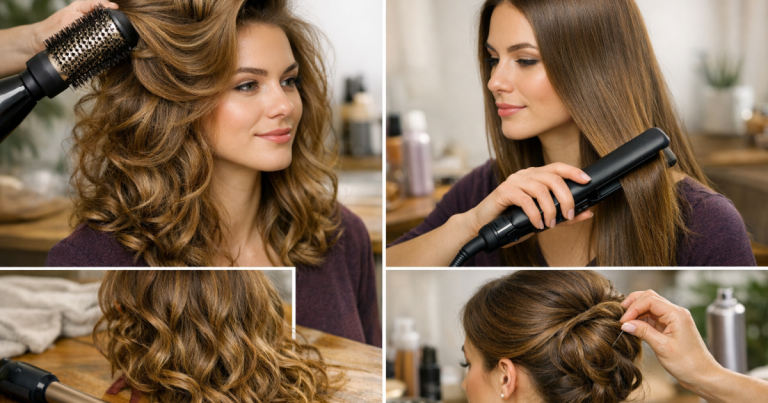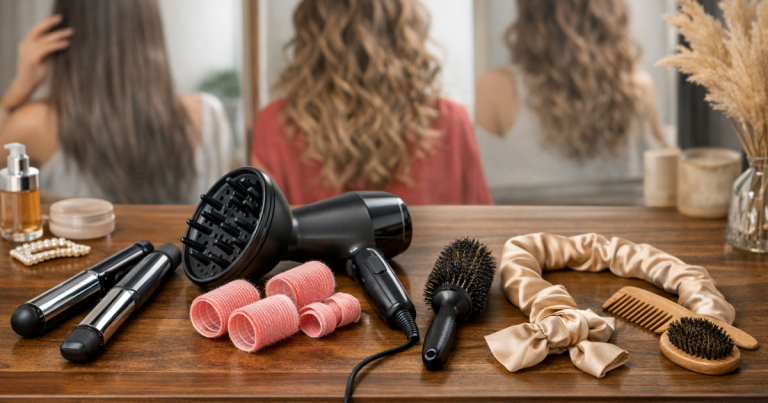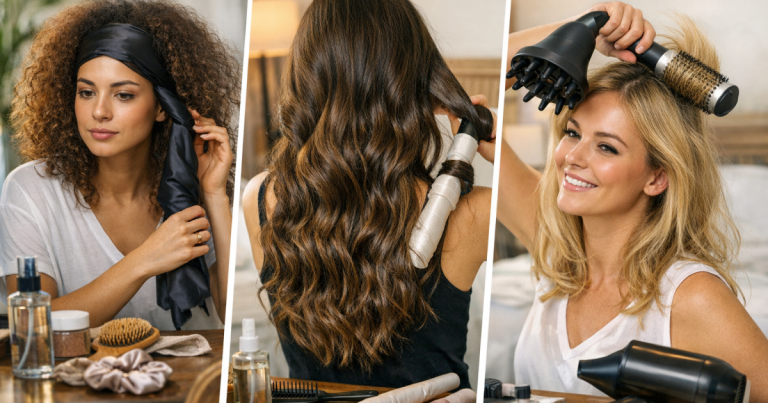
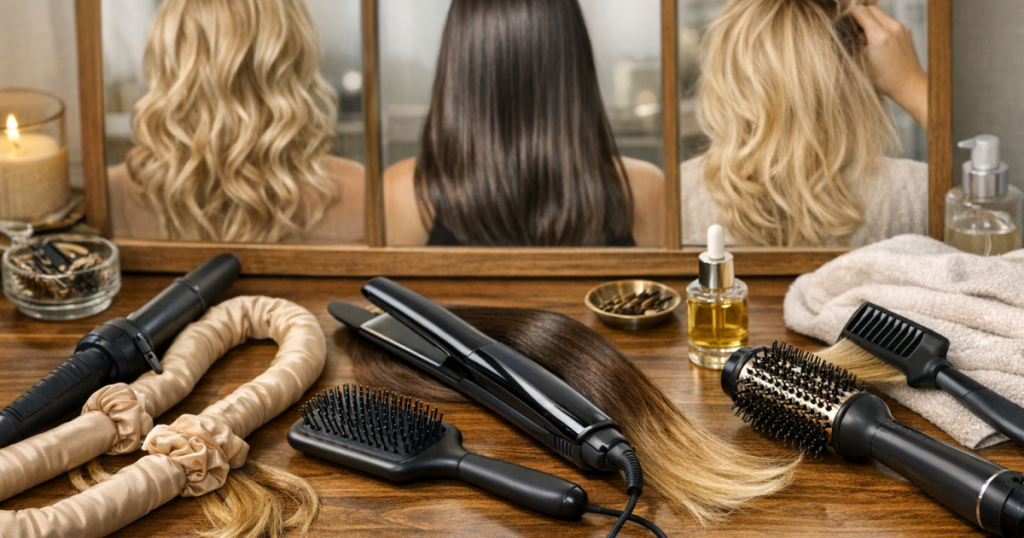
Soft waves, glass hair and root lift all ask different things from your hair: bend, polish or support at the scalp. A hair styling tool guide helps you separate the goal from the gadget, so you are not trying to create airy volume with a smoothing iron or mirror shine with a loose heatless ribbon.
The short version: choose the tool by where the style needs control. Waves need shape through the mid-lengths and ends, glass hair needs smooth tension from root to tip, and root lift needs support close to the scalp without overworking the ends.
The big picture
Most disappointing at-home styles come from a mismatch between the tool and the finish. A curling wand can make a beautiful bend, but it will not automatically give root volume. A straightener can create shine, but it can flatten already fine hair if used too close to the scalp. Heatless tools can protect the hair fibre, but they need enough tension, drying time and placement to hold a visible result.
Before choosing a tool, look at two things: your natural hair behaviour and your styling goal. Fine, low-density hair usually needs lighter tools, smaller sections and less product. Dense or coarse hair often needs stronger section control and more drying time. Wavy and curly hair may already have shape, so the tool’s job is often to define rather than rebuild the pattern. If you are unsure how your strand size and overall fullness affect results, start with this guide to hair density and texture.
Start with the part of the hair you want to change
A useful way to narrow the choice is to stop thinking in tool categories and start thinking in zones.
- Roots: choose tools that lift, set or dry upwards, such as Velcro rollers, a round brush, a root clip technique, a diffuser or a hot brush used carefully at the crown.
- Mid-lengths: choose tools that add bend or smoothness through the main body of the hair, such as heatless curling rods, curling ribbons, wands, large rollers or a blow-dry brush.
- Ends: choose tools that polish, tuck, flick or soften the finish, such as a straightener, round brush, curling wand, finishing brush or a small amount of hair oil.
This roots-to-ends approach is especially helpful if your hair never seems to hold one complete style. You may need one method for the crown and another for the lengths. For a deeper breakdown, the site’s guide to matching tools to roots, lengths and ends explains why styling goal matters more than owning every popular tool.
If you want soft waves
Soft waves need controlled bend rather than tight curl. The best tool depends on whether your hair already has movement and how much heat you want to use.
Fine or low-density hair
Fine hair can look romantic with waves, but it can also collapse if the tool is too heavy or the sections are too large. Heatless curling ribbons, satin rods and small-to-medium Velcro rollers can work well because they create shape without scorching delicate ends. Keep the wrap neat but not overly tight, and avoid loading the roots with rich creams before styling. If using heat, a wand or tong used on moderate settings may create faster bend, but it can also make the ends look dry if repeated too often.
Thick or dense hair
Thick hair usually needs more sectioning. A single large heatless rod may leave the top layer wavy while the underneath stays straight, so split the hair into smaller sections or use more than one tool placement. Heatless methods need hair that is slightly damp or properly prepped, then left until fully dry. If time is limited, a curling wand gives more immediate control, but the trade-off is heat exposure and a more styled finish.
Wavy hair
For natural waves, a diffuser can be a better match than a curling tool because it supports the existing pattern instead of replacing it. Use low airflow, cup the ends gently, and avoid disturbing the roots once a cast starts to form. If you are working with 2A to 2C waves, this step-by-step guide to using a diffuser on wavy hair is a useful next read.
Real-world tool examples for soft waves include the RobeCurls Heatless Curling Headband for overnight bend and flexible curling ribbons for longer, thicker hair. Check whether the diameter and fastening style suit your length and whether you can sleep comfortably in the shape you choose.
If you want glass hair
Glass hair is about a sleek surface, crisp alignment and light reflection. It is less about making hair “flat” and more about getting the cuticle to sit smoothly from roots to ends. The wrong tool can leave the top layer shiny but the underneath puffy, which is why tension and sectioning matter.
Fine hair
Fine hair needs smoothness without losing all movement. A paddle brush and dryer can be enough if the hair is already fairly straight. If you use straighteners, work in small sections and avoid repeatedly clamping the same area. Lightweight serums or oils should be used sparingly, mainly on the ends, because too much product near the root can make fine hair look oily rather than glossy.
Thick, coarse or frizz-prone hair
Denser hair often needs a more structured blow-dry before straightening. A dryer with a concentrator nozzle, a firm brush and patient sectioning can reduce the amount of straightener work needed afterwards. Wide plates may feel efficient on long, dense hair, but check that they can still reach awkward areas around the hairline. A well-known straightener example is the ghd Platinum+ Styler; before choosing any premium styler, verify the heat behaviour, plate shape and whether it suits your texture rather than assuming price alone equals a better result.
Curly hair
Glass hair on curls is a bigger transformation because the tool must stretch the pattern first, then smooth it. That usually means more time, more tension and more heat exposure than a soft wave routine. If your priority is curl health, reserve full glass-hair styling for occasional wear and use heat protectant generously. If your curls are fragile, colour-treated or prone to breakage, a stretched blow-dry with a polished finish may be more realistic than pin-straight shine.
If you want root lift
Root lift is the most placement-sensitive goal. You are not trying to curl the whole strand; you are trying to hold the first few centimetres of hair away from the scalp. That means the tool must support the root while the hair cools, dries or sets.
Fine hair that falls flat quickly
Fine hair often responds best to lightweight lift rather than heavy styling. Velcro rollers at the crown, root clips while air-drying, a small round brush or a gentle hot brush can all help. The important detail is direction: lift the section up and slightly back, then let it cool or dry before touching it. Pulling the hair down while smoothing can undo the volume immediately.
Dense hair with heavy roots
Dense hair may need a stronger drying routine. Focus on removing moisture at the scalp before styling the lengths. A diffuser can help curly or wavy roots dry with more height, while a round brush can create a lifted blow-dry on straighter textures. For a heated option, the ghd Rise Hot Brush is a recognisable example of a tool designed for lift and shape, but check how easily it grips your root area and whether the barrel size works with your layers.
Short layers, fringes and crown areas
Shorter pieces need precision. Large rollers can overshoot the section, while very small tools may create bend rather than lift. A small round brush, compact roller or clip-set technique usually gives better control around fringes and crown splits. For cowlicks, start drying the root in the opposite direction first, then place it where you want it to sit.
Where heatless tools fit best
Heatless tools are strongest when your goal is bend, set or overnight shaping. Satin curling rods, silk wraps, Velcro rollers and soft ribbons can create polished results with less heat exposure, but they are not magic shortcuts. They need the right starting moisture level, secure wrapping and enough time for the hair to set.
They are less effective when you need high-gloss smoothing on very frizzy or coarse hair, or when you need a rapid root reset before leaving the house. In those cases, a dryer, diffuser, hot brush or straightener may be more predictable. A blended routine often works best: heatless waves for the lengths, a quick root-lift method at the crown, and a tiny amount of finishing oil on the ends.
A simple matching list
- Soft, loose waves: heatless curling ribbon, satin rod, large-barrel wand, large rollers or diffuser for natural waves.
- Defined waves with more hold: smaller sections, firmer wrapping, curling wand, tong or heatless rods left until fully dry.
- Glass hair: dryer with nozzle, smoothing brush, straightener, finishing brush and lightweight serum or oil.
- Root lift: Velcro rollers, root clips, round brush, diffuser, hot brush or targeted blow-drying at the crown.
- Volume plus smooth ends: round brush or blow-dry brush at the roots and mid-lengths, then a smoothing pass only where needed.
- Low-heat routine: heatless curling rods for shape, silk hair wrap for overnight protection, and minimal heat only for the root or fringe.
Questions people ask
Can one tool create waves, shine and root lift?
Sometimes, but rarely equally well. A blow-dry brush can add lift and smoothness, and some straighteners can make waves, but a dedicated tool or technique usually gives a cleaner result for each goal.
Are heatless curls better than a curling wand for soft waves?
They are better if your priority is reducing heat and you have enough setting time. A wand is better for speed, precision and last-minute styling, especially on hair that resists heatless shaping.
Why does my glass hair go puffy after an hour?
The most common reasons are moisture left in the hair, weak section tension, humidity, product build-up or hair that was not fully smoothed underneath. Dry and smooth in layers rather than only polishing the top.
What is the easiest root-lift method for beginners?
Try two or three Velcro rollers at the crown on warm, freshly dried roots. Let the hair cool fully before removing them, then loosen with fingers rather than brushing the lift flat.
Should I choose tools by hair type or by the style I want?
Use both. The style tells you the tool category; your hair type tells you the size, heat level, sectioning and prep needed to make that tool work.
What stands out
The smartest tool choice is not the most expensive or the most talked about. It is the one that controls the right part of your hair for the finish you want. Soft waves need bend through the lengths, glass hair needs smooth tension and polish, and root lift needs support at the scalp. Once you choose by styling goal first and hair type second, your routine becomes simpler, quicker and far less dependent on trial and error.