Fine hair can wave beautifully, but it also drops shape quickly if the plates are too hot, the section is too wide or the finish is overloaded. The aim with straighteners for soft waves is not to clamp hard and curl tightly; it is to bend the hair gently, keep the root airy and set the shape before it collapses.
This method works best when the hair is dry, detangled and lightly prepped, with the straightener doing only a few smooth passes. Think loose bends, not ringlets: the softer the movement, the more natural fine hair tends to look.
What to know first
- Fine hair needs smaller sections than thick hair, but a softer grip with the straightener.
- Too much product before styling can make waves separate into strings or fall flat.
- The wave shape comes from wrist angle and movement, not from squeezing the plates tightly.
- Let each wave cool before brushing or touching it, as this helps the shape last.
- Keep volume at the crown by starting the bend below the root, not directly against the scalp.
Prep fine hair so it waves rather than wilts
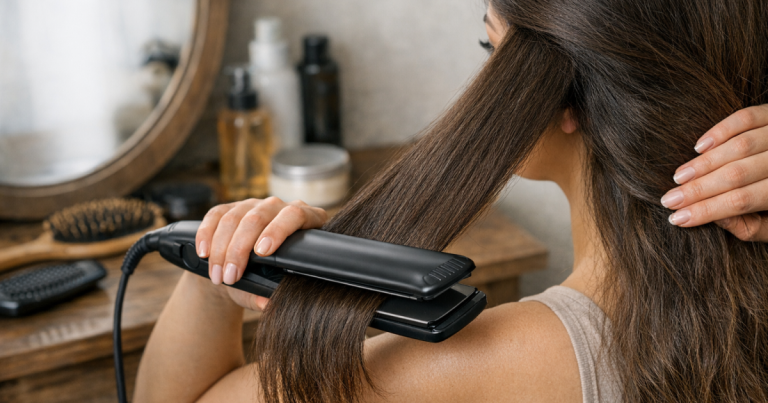
Start with completely dry hair. Straighteners should not be used on damp strands unless the tool is specifically designed for that purpose, and fine hair is particularly prone to looking limp when moisture is trapped under heat. Detangle first so the plates can glide without snagging.
Use a lightweight heat protectant and apply it evenly, then wait until the hair feels dry again before styling. Fine hair usually needs less product than medium or coarse hair; if the lengths feel coated, sticky or heavy, the finished waves are likely to collapse. For more heat-protection habits that matter on delicate strands, see how to protect fine hair when using multi-stylers.
If your roots become oily quickly, keep leave-in creams, oils and rich serums away from the scalp. A tiny amount through the ends after styling can soften the finish, but applying it before heat often makes fine hair look thinner.
Choose the right section size and starting point
Sectioning is what stops fine hair from looking either too flat or too crimped. Take a section that is narrow enough for the plates to heat evenly, but not so tiny that the result becomes overly curly. Around the face, use slightly smaller sections for control; at the back, use wider sections for a softer, more lived-in wave.
Begin each bend a little below the root rather than at the scalp. On fine hair, clamping too close to the root can remove lift and create a flat top with movement only at the ends. If you want more height, lift the section up and away from the head before placing the straightener, then keep the first bend subtle.
Leave the very ends slightly straighter if your hair is shoulder length or longer. This makes the style look modern and stops fine ends from flipping into a tight curl. If your hair is short, work more slowly around the cheekbone and jawline so the shape looks intentional rather than flicked out.
The step-by-step waving method
1. Start at the front where detail matters most
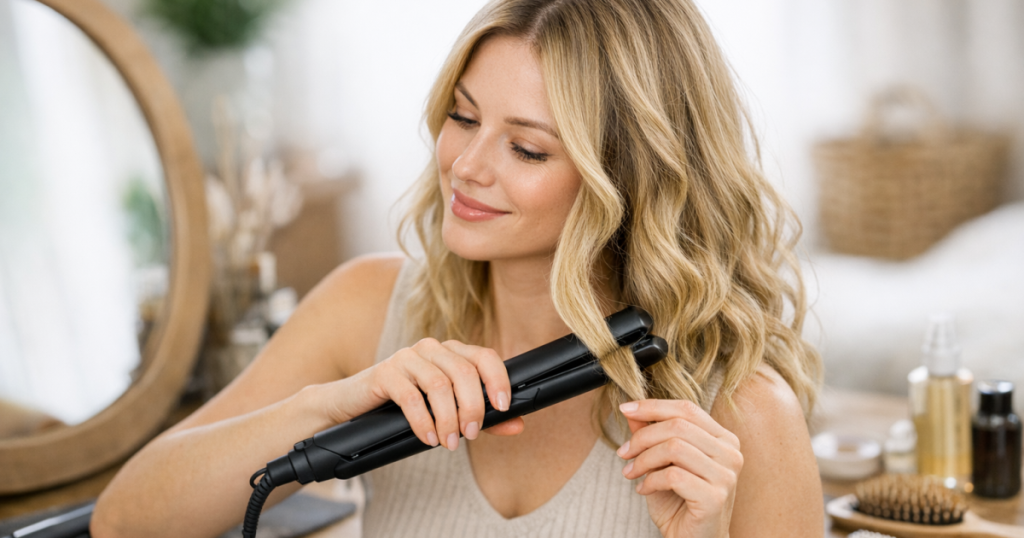
Take a face-framing section and hold it lightly away from your face. Place the straightener below the root, close the plates gently, then rotate your wrist half a turn away from your face. Glide down the hair in one steady movement. The slower the glide, the more defined the bend; the quicker the glide, the softer the result.
2. Alternate the direction through the mid-lengths
For a natural finish, wave one section away from the face, then the next very slightly towards the face. Keep the sections around the hairline moving away from the face for softness, but vary the hidden layers so the waves do not merge into one large bend.
3. Avoid double-heating the same piece
If a section has not formed perfectly, let it cool before adjusting it. Repeated passes while the strand is still hot can make fine hair feel dry and can flatten the overall shape. A slightly imperfect wave often looks better than a polished curl on fine hair because it keeps the finish airy.
4. Let the ends pass through softly
As you approach the ends, release some pressure from the plates. This prevents fine ends from becoming sharp, kinked or overly straight. If your ends are fragile, leave the last little bit out of the plates and blend it later with your fingers.
5. Cool before you break up the shape
Once the whole head is waved, leave the hair alone for a few minutes. Do not brush, rake or add finishing spray while the hair is still warm. Cooling is the quiet step that makes the biggest difference to longevity on fine textures.
How to keep root volume while using a straightener
The easiest way to lose root volume is to pull every section straight down while styling. Instead, overdirect sections slightly upwards or outwards before making the bend. This creates lift without needing a tight curl at the scalp.
For the crown, take horizontal sections and lift them away from the head before gliding the tool through the mid-lengths. Avoid clamping the first few centimetres flat. If your crown parts easily, style the hair in the opposite direction while it cools, then flip it back into place.
If root lift is your main styling challenge, the technique overlaps with blow-dry brush habits. The principles in using a hot brush without losing root volume are useful here too: lift first, smooth second, and avoid dragging the root flat.
Fine-hair product rules that make waves last
Fine hair often needs hold, but it rarely benefits from heavy hold products applied all at once. Use a light layering approach instead. A small amount of heat protectant before styling, a flexible mist after the waves cool and a touch of texture at the roots is usually more flattering than mousse, serum and strong hairspray stacked together.
- If your waves fall within an hour: use smaller sections, let them cool longer and avoid brushing too soon.
- If the waves look stringy: reduce oils and creams, then brush through only after the hair has cooled.
- If the ends look dry: lower the heat setting if your tool allows, glide faster and finish with a tiny amount of lightweight smoothing product on the ends only.
- If the top looks flat: start lower on the section, lift at the root and avoid pressing the plates against the scalp area.
For overnight or low-heat alternatives, the setting principles are similar: light prep, controlled tension and a full cool-down or dry-down period. The fine-hair tips in making heatless curls last on fine hair are helpful if you want to rotate heat styling with gentler methods during the week.
Common mistakes that make fine hair look flat
Using too much tension: A straightener should guide the hair into a bend, not crush it. A tight clamp can remove natural body and leave visible plate marks.
Making every wave identical: Perfectly uniform waves can make fine hair look sparse because the sections separate too neatly. Slightly varied direction gives a fuller finish.
Starting too high on the head: A tight bend at the root can look dated and may collapse into flatness quickly. Keep the root lifted and make the visible wave through the mid-lengths.
Brushing too early: Fine hair is at its most shapeable while warm. Let it cool, then soften with fingers or a wide-tooth comb before deciding whether it needs more polish.
Finishing with too much shine spray: Glossy products can look beautiful on coarse hair, but on fine hair they can emphasise separation. Use shine sparingly, mainly on the ends.
Adapting the method by hair length
Short fine hair
Use a slim straightener if you have one, and work with very light wrist movement. Instead of trying to wrap the hair fully around the plates, create gentle bends through the top layers and leave the ends relaxed. Around the face, point the ends away from the cheekbones for softness.
Shoulder-length fine hair
This length is often the easiest for soft waves because there is enough hair to show movement without too much weight pulling the shape down. Start around eye or cheekbone level and alternate direction through the mid-lengths. Keep the ends slightly undone.
Long fine hair
Long fine hair can lose wave quickly because the lengths weigh down the bend. Work in neat sections, let each one cool properly and avoid overloading the bottom half with product. If the underneath layers never hold, focus the strongest bends on the top and face-framing layers instead.
Questions people ask
Are straighteners for soft waves suitable for very fine hair?
Yes, provided you use light tension, dry hair, heat protection and minimal passes. Very fine hair usually looks better with loose mid-length bends than tight curls from root to tip.
Should I brush out the waves or use my fingers?
Use your fingers first. If the waves still look too defined once cool, use a wide-tooth comb or a soft brush very lightly through the ends, not from the root down.
Why do my waves disappear so quickly?
The most common causes are sections that are too large, brushing while the hair is warm, too much conditioning product or waves that are formed too loosely for your hair length.
Can I do this on freshly washed fine hair?
Yes, but freshly washed fine hair can be slippery. Make sure it is fully dry, use lightweight prep and consider a small amount of texture spray after cooling if the hair feels too soft.
How often should I use heat on fine hair?
There is no single rule, but fine hair benefits from spacing out direct heat where possible. Rotate with rollers, wraps or overnight methods if your ends start to feel dry or lose movement.
What to remember
Soft waves on fine hair come from restraint: gentle pressure, controlled sections, a smooth glide and enough cooling time. The aim is not to force the hair into a curl, but to create relaxed movement that keeps the roots light and the ends soft.
If your first attempt looks too curly, brush less and use larger sections next time. If it falls flat, use smaller sections, cool for longer and reduce product weight. Once you find the balance, a straightener can create polished, soft movement without making fine hair look overstyled.