If your blow-dried shape drops flat as soon as you smooth the top layer, the issue is usually technique rather than the tool. Keeping hot brush root volume intact is mostly about lifting the roots first, letting them cool in an elevated position, then polishing the lengths without dragging everything down. A hot brush can create a soft salon-style bend at home, but it needs a different approach from straighteners, tongs or overnight rollers.
The aim is not to make the brush work harder. It is to control direction, tension, heat time and cooling so the root area keeps its support while the ends look smooth.
The short version
- Start with roots that are dry or nearly dry, depending on whether your brush is a hot air brush or a heated dry-styling brush.
- Lift each section up and slightly forward before rolling or gliding the brush through.
- Style the root area first, then the mid-lengths and ends, rather than pulling from scalp to tip in one heavy pass.
- Let the lifted section cool before touching it, brushing it out or adding finishing product.
- Use lighter product at the crown than you use through the ends, especially on fine or silky hair.
Why hot brushes flatten roots
A hot brush can smooth beautifully because it combines heat, bristles and tension. That same combination can also press the hair flat if the brush is pulled down from the crown, held too close to the scalp without lift, or used repeatedly over the same top section.
Root volume depends on the direction the hair cools in. If the hair is heated while it is stretched downward, it tends to settle downward. If it is heated and cooled while lifted, it keeps more height. This is why a quick root lift often lasts longer than aggressive backcombing: the shape is set into the hair rather than just roughed up at the surface.
It also helps to separate your styling goal from your finishing goal. Lift comes from the root. Smoothness comes mostly from the mid-lengths and surface. Hold comes from cooling time and light finishing product. If you want a clearer breakdown of those styling priorities, the lift, shape, smoothness and hold matrix is a useful companion.
Step 1: Start with the right level of dryness
Check your tool instructions before you begin, because not every hot brush is designed for the same stage of styling. A hot air brush, such as the Revlon One-Step Volumiser Plus, is typically used on damp hair that has already been towel-blotted and partly dried. A heated bristle brush, such as the ghd Rise Hot Brush, is generally used on dry hair for shaping and refreshing.
For root lift, the worst starting point is hair that is wet at the scalp but dry at the ends. The ends will over-style while the roots stay limp. Rough-dry the root area first with your fingers, lifting the crown as you go. If your hair is fine, aim for a light, airy feel before bringing in the brush. If your hair is thick, make sure the underneath layers are not holding dampness that will pull the finished shape down.
Step 2: Prep the roots without overloading them
Root prep should feel almost invisible. Too much cream, oil or heavy leave-in product near the scalp can make lift collapse before you have even styled it. Keep smoothing products from the ears down, and use root-specific products sparingly.
- Fine hair: use a small amount of lightweight mousse or root spray, then dry the roots with your head upright rather than relying only on flipping upside down.
- Medium hair: use a little heat protectant through the lengths, then add lift product only where you actually need height: crown, parting and fringe area.
- Thick hair: focus on drying control first. A root product helps only if the hair is sectioned well enough for heat and airflow to reach the base.
- Wavy hair: avoid brushing through soaking-wet waves with too much tension. Dry or diffuse first until the roots have some natural support, then use the hot brush more selectively.
A detangling brush can help before styling, but avoid polishing the hair flat at this stage. The goal is smooth, separated sections, not a compressed crown.
Step 3: Section for lift, not just neatness
Big sections are faster, but they are also heavier. Heavy sections cool flat because the root area cannot hold the weight. For most at-home styling, sections around 2–4 centimetres wide at the crown are easier to lift than large horizontal slices.
Clip away the top layer and begin just below the crown. This gives the visible top section something to sit on. If you style only the surface, it can look smooth for ten minutes and then drop because there is no support underneath.
At the parting, take diagonal sections rather than perfectly straight lines. Diagonal sections help the hair fall more naturally and reduce the risk of a visible ridge. Around the front, direct the hair away from the face if you want a lifted, open shape.
Step 4: Use the brush angle that creates height
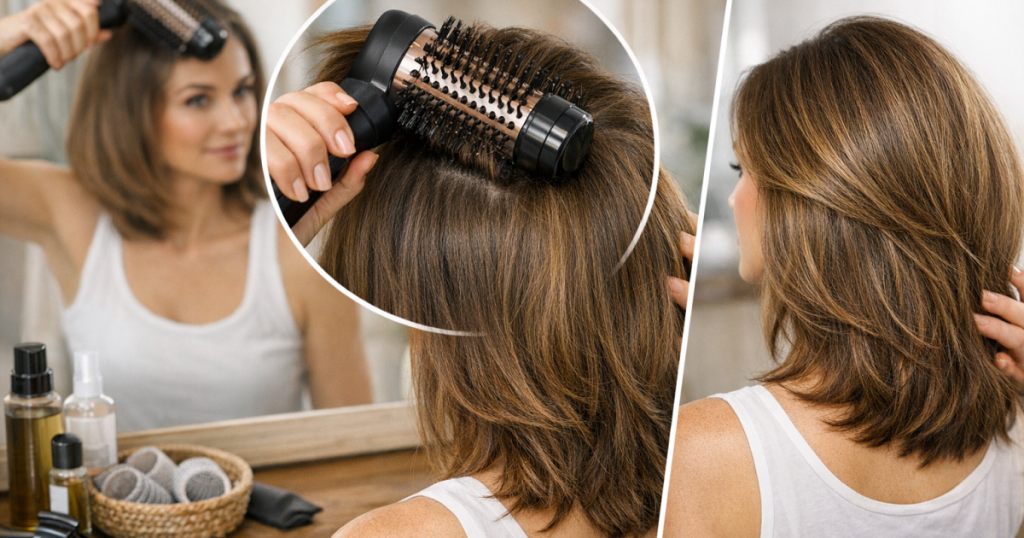
The most important movement is at the first few centimetres from the scalp. Place the brush under the section at the root, then lift the hair up and slightly forward. Hold that elevation briefly before moving down the hair. Do not immediately pull the brush straight down the side of your head.
For crown volume, over-direct the section in the opposite direction from where it will sit. For example, lift a crown section forward before letting it fall back. For side volume, lift the section upward and slightly across the parting. This creates a small amount of hidden support without making the style look dated or stiff.
Keep the tension firm but not aggressive. If you stretch the root too tightly, the hair becomes sleek rather than lifted. Think of the brush as propping the hair up, not ironing it down.
Step 5: Style the ends after the root has set
A common mistake is trying to create root lift, smoothness and curled ends in one slow pass. That usually means the brush spends too long pulling the whole section downward. Instead, work in two stages.
- First, lift and warm the root area while holding the section elevated.
- Next, move to the mid-lengths and ends, using a lighter glide or a soft roll depending on the finish you want.
- Finally, release the section without brushing it flat. Let it sit for a moment before blending.
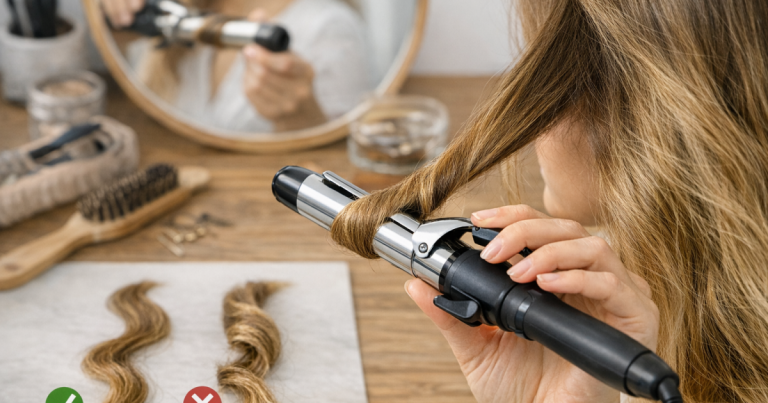
If you want a bouncy bend, roll only the lower half of the section around the brush. If you want a smoother blow-dry look, glide through the lengths while keeping the root lifted with your other hand. This small separation of tasks is what keeps the crown from collapsing.
Step 6: Cool the lift before you touch it
Hair is most shapeable when warm and most reliable once cool. If your hot air brush has a cool setting, use it at the root before releasing the section. If it does not, hold the section lifted for a few seconds after removing the brush, or clip it loosely at the crown while it cools.
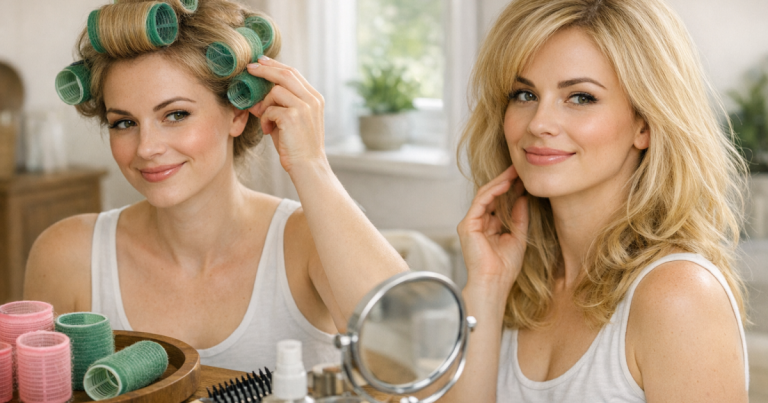
Velcro rollers are useful here because they hold the root in a raised position while you do make-up, get dressed or finish the rest of your hair. They are especially helpful at the fringe and crown, where a small amount of set can change the whole silhouette. For a front section that keeps falling forward, try the same lift-and-cool logic used when you set curtain bangs with Velcro rollers.
Hair-type tweaks that make the biggest difference
Fine or silky hair
Fine hair often loses height because the brush is too hot for too long or the section is too large. Use smaller sections, lighter product and a shorter pass at the roots. Let each section cool fully before blending. If your shape disappears within an hour, your issue may be hold rather than technique; the advice on making styles last on fine hair also applies to hot-brush volume because cooling, product weight and humidity are the same core variables.
Thick or dense hair
Thick hair needs proper sectioning more than extra product. Dry the roots thoroughly first, then lift smaller crown sections with controlled tension. If the surface looks puffy but the roots feel flat, you are probably smoothing the outside without drying or shaping the base underneath.
Wavy hair
Wavy hair can look flat at the crown and fluffy through the ends if it is brushed too much. Preserve some natural texture by using the hot brush only at the root and top layer, then shaping the ends lightly. For a more wave-friendly routine, a diffuser or heatless set may be better on wash days, with the hot brush reserved for second-day lift.
Layered hair or grown-out fringes
Layers respond well to over-direction. Lift the shorter crown pieces up before shaping the ends back into the style. Around the face, avoid rolling everything under at the root, as this can make the fringe sit heavy. Lift first, then curve the ends only.
Quick troubleshooting checks
- Roots look good, then drop quickly: the section probably cooled while falling downward. Clip or hold it lifted for longer.
- Hair looks smooth but flat: you are pulling from root to tip too early. Create root lift first, then polish the lengths.
- The crown looks bulky rather than lifted: sections may be too wide, or product may be sitting near the scalp.
- Ends look overdone: spend less time rolling the whole section and more time controlling the first few centimetres at the root.
- Frizz appears around the top layer: check that the hair is dry enough before styling and reduce repeated brushing over the same area.
When a hot brush is not the best root-volume tool
A hot brush is great for soft movement, refreshed layers and a polished everyday finish. It is less ideal when you need very strong root lift on very fine hair in damp weather, or when your natural curl pattern shrinks and frizzes with brushing. In those cases, Velcro rollers, a diffuser, root clips or an overnight heatless method may give better lift with less repeated styling.
If you are deciding whether your routine needs heat, heatless support or a different tool type altogether, use the guide to choosing styling tools by hair type, finish and damage risk as a next step.
Common questions
Should I use a hot brush on wet or dry hair?
Follow the instructions for your exact tool. Hot air brushes are usually intended for damp, partly dried hair, while heated bristle brushes are generally for dry hair. Using the wrong starting point can reduce lift and increase frizz.
How do I stop my crown going flat after brushing out?
Let the crown cool fully before brushing. Then blend with your fingers or a wide-tooth comb first, rather than dragging a brush from the roots through the ends.
Is mousse or hairspray better for root volume?
Mousse helps create support before styling; hairspray helps preserve the shape afterwards. Fine hair usually needs very small amounts of both rather than a heavy layer of either.
Can a hot brush replace Velcro rollers?
It can for quick smoothing and soft lift, but Velcro rollers often hold the root higher while the hair cools. Many routines work best with the hot brush for shaping and one or two rollers at the crown for setting.
In brief
To use a hot brush without losing root volume, lift the roots before smoothing the lengths, work in smaller crown sections and let the hair cool in the shape you want it to keep. The difference is usually not a more expensive tool; it is better direction, lighter product and a little patience before brushing the style into place.