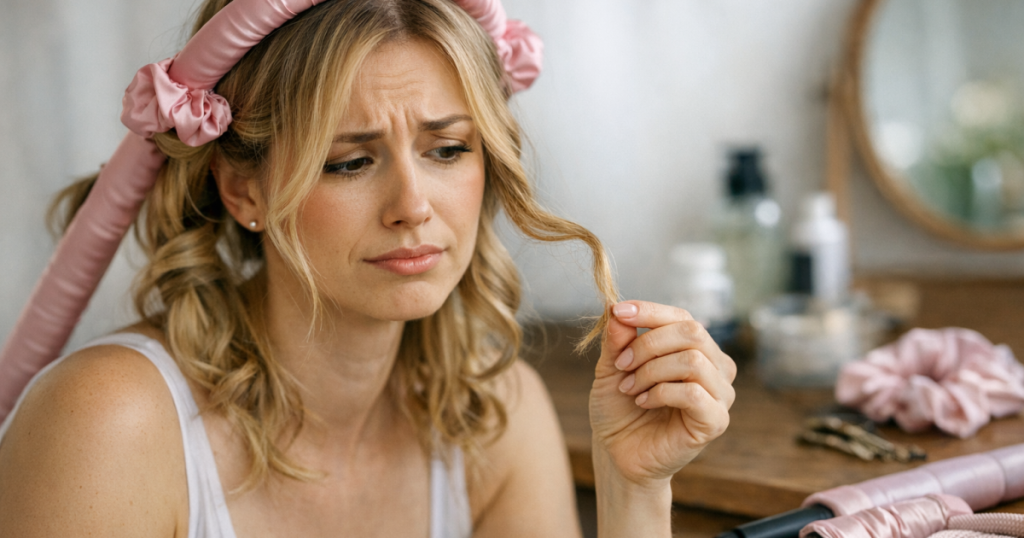
Fine hair can look beautifully bouncy at bedtime and almost straight by breakfast. If heatless curls dropping is the problem, the fix is usually less moisture, lighter product, smaller sections and better overnight support rather than a stronger tool. The aim is to create a set that dries completely, cools into shape and survives brushing without being overloaded.
At a glance
- Start with hair that is barely damp, not wet, because fine hair loses shape when it dries too slowly.
- Use fewer, lighter products: a small amount of mousse or setting spray is usually better than oil, cream and serum together.
- Take smaller sections around the face and crown, where fine hair tends to collapse first.
- Keep the curl pattern supported overnight with a soft wrap, bonnet or loose scarf so friction does not flatten it.
- Separate curls with fingers first, then only brush if you want a softer wave.
Why fine hair drops faster than thicker hair
Fine hair has a smaller strand diameter, so each strand has less natural structure to hold a bend. It can still curl beautifully, but it is easily pulled straight by water, heavy styling products, scalp oil, humidity, brushing and even the weight of its own length.
The common mistake is trying to make the curl stronger by adding more product. On fine hair, that often does the opposite. Rich leave-in creams, shine oils and heavy finishing sprays can make the hair look smoother for the first hour, then slowly drag the curl down. The better approach is controlled preparation: enough grip for the hair to remember the shape, but not so much coating that it becomes limp.
Length matters too. Fine hair that sits below the shoulders often needs a tighter set than the final look you want. If you want soft waves in the morning, the overnight curl may need to look more defined at first. A loose wrap on long, silky hair can look pretty when removed, then fall into barely-there bends by lunchtime.
Step 1: start with the right level of dampness
For fine hair, the sweet spot is usually around 80–90% dry before you wrap, roll or twist. Hair should feel cool and flexible, not wet at the roots or ends. If your pillow, ribbon or rollers feel damp when you remove them, the set has not fully dried and the curl will relax quickly.
Quick dampness check
- Press a section between two fingers. If it feels wet rather than just cool, wait longer.
- Check the nape and crown, not only the front pieces, because hidden sections dry more slowly.
- If your ends are dry but roots are damp, mist only the mid-lengths lightly rather than re-wetting everything.
- For very silky fine hair, try setting on fully dry hair with a fine mist of styling spray instead of water.
Fine hair that is wrapped too wet often dries flat at the root and puffy at the ends. That combination makes the curl look uneven and short-lived. A slightly drier set gives a cleaner bend and helps keep the root area from sticking to the scalp.
Step 2: use grip, not weight
The best prep for fine hair is usually a lightweight hold product placed where the curl needs memory. Mousse, setting spray or a very light curl spray can work well, but the amount matters. Apply a small amount through the mid-lengths and ends, then comb or finger-rake it through so one area is not overloaded.
Be cautious with oils before setting. A drop of argan oil or serum can smooth dry ends after styling, but using it before a heatless set can make fine hair too slippery. The same applies to rich masks, heavy conditioners and leave-in creams. They can be useful on dry or coarse hair, but on fine hair they often reduce hold.
Product placement that keeps bounce
- Put hold product through the lengths, not directly on the scalp.
- Use the least product on the top layer, where greasiness shows fastest.
- Keep smoothing products for the final step, and use them only on the ends.
- If your curls feel crispy, use less product next time rather than brushing harder.
Step 3: make your sections smaller where your hair collapses
Fine hair often needs uneven sectioning. The front, crown and shorter layers may need smaller wraps than the back. Smaller sections dry faster and create a tighter curve, which gives you more shape to work with once the curl softens.
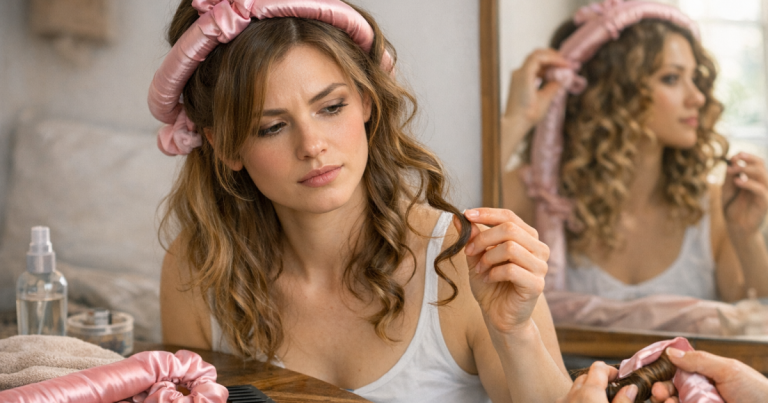
If you use a ribbon, avoid wrapping huge panels of hair around the barrel. A big section may look neat while wrapped, but the inner hairs may not take the same bend as the outer hairs. If you have face-framing pieces or choppy layers, the technique in using a silk curling ribbon on layered hair is especially helpful because it shows why tension and placement matter more than just sleeping in the tool for longer.
For crown volume, lift the section slightly away from the head as you wrap. Pulling the hair downwards at the root can create a beautiful curl through the ends but leave the top flat. Fine hair needs lift built into the set, not added only at the end with backcombing.
Step 4: match the method to the result you want
Not every heatless method holds the same way on fine hair. A satin curling rod or silk ribbon tends to create soft, elongated curls, which can be lovely but may loosen quickly on very straight hair. Rollers can create more root lift, while pin curls or small twists can create a stronger bend that softens during the day.
- For long, fine, straight hair: set slightly tighter than your desired finish and avoid large sections.
- For fine hair with natural wave: use a light hold product and preserve your natural pattern rather than forcing a perfectly uniform curl.
- For fine, layered hair: wrap short layers separately so they do not slip out and straighten.
- For fine hair that gets oily quickly: keep products away from the roots and refresh with a small amount of dry shampoo before setting, not after the curls have dropped.
If your main issue is flatness at the crown, rollers may be more effective than a single overnight rod. Self-grip styles can add lift, although they can also snag if removed roughly; this is where it is useful to understand why self-grip rollers can add root lift with caveats before relying on them for delicate or tangle-prone hair.
Step 5: secure the set without crushing it
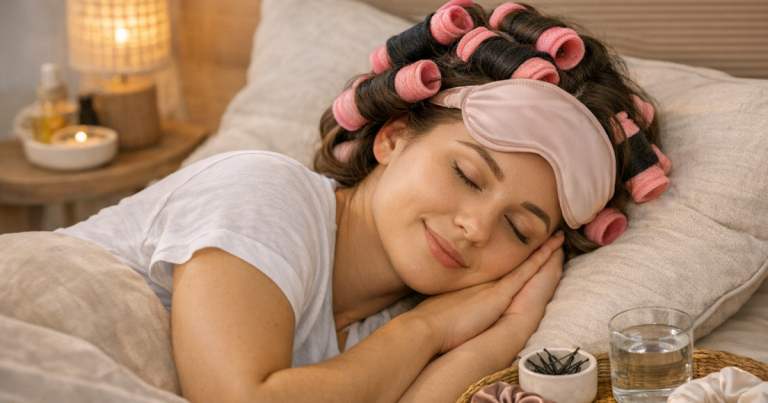
Fine hair is easily flattened while you sleep. A loose braid over a ribbon, a tight bonnet, or a heavy pillowcase pressing the same section all night can undo good preparation. The goal is to stop friction without compressing the curl pattern.
Use a soft scrunchie rather than a tight elastic. If the tool has ties, secure them firmly enough that the wrap does not slide, but not so tightly that you create dents. If your hair slips out overnight, add a small claw clip or soft pin near the top instead of pulling the whole set tighter.
Your sleeping position also matters. If one side always drops first, it may be the side you sleep on. Try arranging the wrapped hair higher on the head or shifting the bulk of the set behind the shoulders before you lie down. Small comfort adjustments can make a noticeable difference to the morning result.
Step 6: take the curls down slowly
Rushing the take-down is one of the quickest ways to lose definition. Unwrap in the direction of the curl rather than tugging downwards. If a section is caught, loosen it with your fingers before pulling the tool away.
Once the curls are out, let them sit for a few minutes before separating them. Fine hair can look overly curled at first, but that early definition is useful. If you brush immediately, you may turn a long-lasting curl into a soft wave before you have even left the house.
Best finishing order for fine hair
- Release all sections gently.
- Shake the roots with fingertips, keeping your head upright or slightly tilted.
- Separate large curls into two or three smaller pieces.
- Apply a flexible hairspray in light layers rather than one wet blast.
- Add a tiny amount of smoothing product only to dry-looking ends.
A detangling brush can be helpful before you set, but brushing after styling is a different decision. If your hair is fragile, knotty or prone to stretching, the notes on why gentle detangling has real limits on fragile hair are worth keeping in mind. For many fine hair types, fingers give more control than a brush once the curls are formed.
Step 7: protect the shape through the day
Heatless curls dropping after a few hours is often caused by the finishing routine rather than the overnight set. Too much touching, damp weather, scarves, high collars and heavy bags brushing against the hair can all loosen the pattern. Fine hair does not need to be left completely untouched, but it does need a bit of support.
Use flexible hold in layers. Spray lightly, wait a minute, then decide whether you need more. A wet, strong spray can make fine hair feel stiff and then collapse in clumps. A dry, flexible mist usually preserves movement better.
If your curls start to soften, twist the front pieces away from your face for a few minutes while you get ready or during a break. You can also clip the crown up loosely while travelling, then release it when you arrive. This is not about creating a new curl; it is about stopping the first signs of flattening from spreading through the whole style.
Common reasons the curl still will not hold
- Your conditioner is too rich: fine hair can be conditioned well and still be over-softened. Try using a lighter conditioner or applying it only from mid-lengths down.
- Your sections are too large: big sections create a softer result and may not dry evenly overnight.
- Your tool is too wide for your hair length: a large rod creates loose bends, not long-lasting curls, on shorter or very silky fine hair.
- You are brushing too soon: let the curl settle, separate with fingers, then decide whether a brush is really needed.
- Your hair is too clean and slippery: freshly washed fine hair may need a little mousse or texture spray to create grip.
- Your roots are oily: oil at the scalp can drag the style down even if the ends are curled well.
A simple routine to try tonight
Wash and condition lightly, then allow your hair to air-dry until it is almost dry. Apply a small amount of mousse or a light setting spray through the lengths. Divide the hair into smaller sections around the front and crown, then wrap with even tension, keeping the roots lifted rather than pulled flat.
Secure the set softly and protect it from friction overnight. In the morning, remove the tool gently, let the curls rest, separate with fingers and finish with a light layer of flexible hold. If the result is too curly at first, wait before brushing; fine hair usually relaxes naturally within the first hour.
Keep notes for two or three attempts. If the curl is too tight but lasts well, increase section size slightly. If it looks perfect at first but falls quickly, use smaller sections, less moisture or a lighter finishing product. Fine hair styling is often about tiny adjustments rather than a completely different routine.
Helpful questions
Why do my heatless curls look good in the morning but fall by lunch?
They are probably too soft at the start. Fine hair needs a slightly stronger set than the final look you want, plus light hold and minimal brushing so it can relax gradually without going straight.
Should fine hair be wet or dry for overnight curls?
Barely damp or fully dry with a light styling mist is usually best. Wet fine hair can take too long to dry while wrapped, leaving the curl weak and the roots flat.
Is mousse or hairspray better for fine hair?
Mousse helps build grip before setting, while hairspray helps preserve the finished shape. Many fine hair routines work best with a small amount of mousse first and a light, flexible spray at the end.
Can layers make heatless curls drop faster?
Yes, short layers can slip out of the wrap or curl in different directions. Wrap layered sections separately and use smaller pieces around the face so the shorter hair gets enough tension.
How do I refresh fine heatless curls the next day?
Mist your hands lightly, twist the weakest sections around your fingers, then clip them while they dry. Avoid re-wetting the whole head, as too much moisture can flatten fine hair quickly.
What stands out
Fine hair can hold heatless curls, but it needs a lighter, more deliberate routine than thicker or coarser hair. The biggest improvements usually come from setting hair drier, using less product, reducing section size and handling the curls gently when you take them down. Once those basics are right, the style should look softer and more natural as the day goes on, rather than disappearing before you have had a chance to enjoy it.