Tangles are where a brush proves itself. A good detangler should loosen knots without turning fine hair limp, making thick hair feel like a workout, or disrupting curls more than necessary. This Tangle Teezer Original Detangling Brush review looks at the real question most shoppers have before adding it to their styling drawer: is it better for fine hair, thick hair, or somewhere in between?
The short version
The brush is strongest as a daily detangler for straight, wavy and moderately thick hair that knots easily. It is gentle-feeling, easy to hold and useful before heatless styling, but very dense, coarse or tightly coiled hair may need smaller sections, more conditioner slip, or a brush with a handle and firmer reach.
Product overview
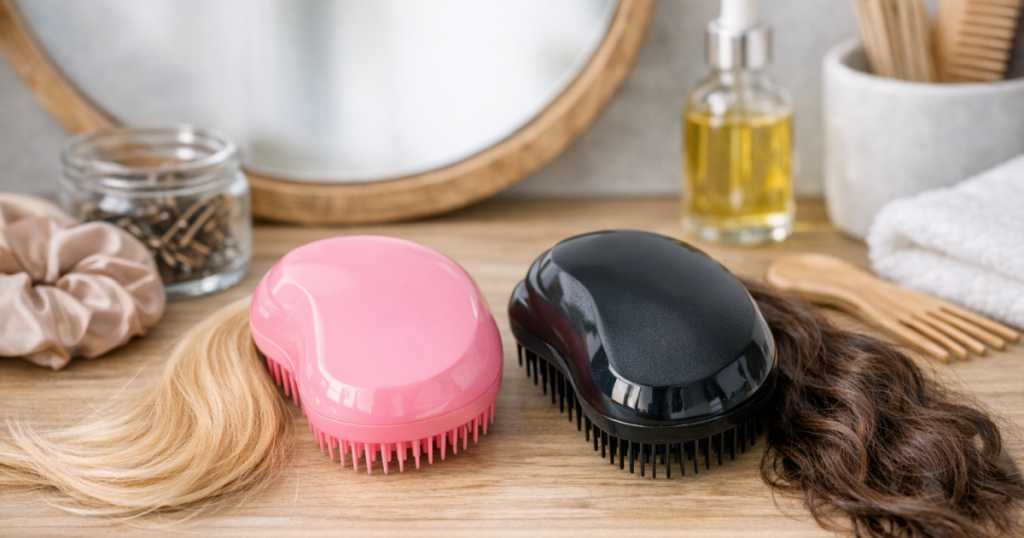
The Tangle Teezer Original Detangling Brush is a palm-held detangling brush from Tangle Teezer, designed for smoothing through knots rather than creating a finished blow-dry shape. Its recognisable handle-free shape is part of the appeal: it sits in the hand, follows the curve of the head and feels less bulky than a paddle brush in a wash bag or bathroom drawer.
It belongs in the accessories part of a styling routine, not as the star tool that creates curls, lift or straightness on its own. Think of it as the prep step before a satin heatless curling rod, Velcro hair rollers, a silk wrap, a straightening brush, or a dryer attachment. If your hair starts tangled, most styling tools have to work harder, and the finished look usually suffers.
For UK shoppers, the main thing is to check the exact listing name before buying. Tangle Teezer makes several brushes for different use cases, so confirm you are looking at the Tangle Teezer Original Detangling Brush rather than a shower, thick-and-curly, finishing or blow-dry-specific model. Colours and editions can vary by retailer, but suitability matters more than shade.
Key specs
- Product type: handheld detangling brush.
- Brand: Tangle Teezer.
- Design: handle-free, palm-held shape.
- Teeth: flexible detangling teeth arranged to work through knots; verify the exact edition if the retailer describes a special version.
- Main use: detangling and smoothing before styling, washing out masks, or resetting hair between styles.
- Hair types to consider: fine, straight, wavy and medium-density hair are the most straightforward match; thick hair can work well with sectioning.
- Not the same as: a round brush, vent brush, curl-defining brush or heated styling tool.
- Care check: remove shed hair regularly, rinse away product build-up and let it dry fully before storing.
Pros and cons
Pros
- Gentle-feeling on knots when used from the ends upwards rather than dragged from the roots.
- Compact enough for a gym bag, overnight bag or dressing table drawer.
- Useful before heatless styling because it helps create a smoother starting point.
- Works well for many fine and wavy hair types that tangle after washing or sleeping.
- The handle-free shape gives good control around the hairline, nape and crown.
Cons
- The handle-free design will not suit everyone, particularly if you prefer a longer grip for thick hair.
- Dense hair needs sectioning; trying to brush through a whole thick head at once can feel inefficient.
- It is not designed to create volume, curl shape, sleek tension or a blow-dried finish by itself.
- Very curly, coily or coarse hair may need more slip and patience than the brush alone can provide.
- Over-brushing fine hair can flatten roots and reduce natural texture.
Performance in real use
Detangling on fine hair
Fine hair is where the Tangle Teezer Original Detangling Brush feels most immediately convincing. The brush glides best when knots are light to moderate: post-shower tangles, scarf friction at the nape, or hair that has slept in a loose bun. It is particularly useful if your fine hair tangles easily but looks greasy or flat when overloaded with leave-in products.
The catch is technique. Fine strands can snap when rushed, no matter how gentle a brush feels. Start at the very ends, hold the section above the knot to reduce pulling at the scalp, and work upwards in short passes. If your hair has very little density, keep brushing minimal once the tangles are gone. The goal is separation, not polishing the hair until it loses all movement.
Detangling on thick hair
On thick hair, the brush is more dependent on sectioning. It can work, but it is not a magic shortcut through a dense head of hair. Divide hair into manageable sections, use conditioner or leave-in slip where appropriate, and brush from ends to mid-lengths before moving closer to the root. This is where the lack of handle can be divisive: some people enjoy the control, while others prefer more leverage.
If your thick hair is also coarse, curly or prone to puffiness, judge the brush by how your hair behaves after detangling, not just during it. A brush can remove knots but still disturb pattern, volume or definition. For a wider view of tool choice by texture and problem, the site’s guide to which tools actually fix hair-type styling problems is a useful next step.
Comfort and control
The palm shape makes the Tangle Teezer Original Detangling Brush feel less formal than a traditional brush. It sits close to the head, which helps around awkward areas such as the nape and behind the ears. For anyone with wrist fatigue or a strong preference for handles, though, the shape can feel too small or too easy to drop when used with wet, conditioned hands.
Finish before styling
This brush is best judged as a prep accessory. Before heatless curls, it helps smooth the lengths so hair wraps more evenly. Before rollers, it removes snags that can turn into dents. Before a sleek style, it helps distribute hair into cleaner sections. It will not replace a styling brush for tension or a proper attachment for shaping airflow, but it can make the rest of the routine feel calmer and more controlled.
Maintenance and product build-up
Detangling brushes pick up conditioner, oils, shed hair and styling residue quickly. If the teeth start to look dull or feel draggy, remove hair from the base and wash the brush with warm water and a little mild shampoo. Let it dry fully before putting it in a closed bag. This matters for fine hair in particular, because product residue on a brush can make clean hair look flat faster.
Who it’s best for / who should skip it
The Tangle Teezer Original Detangling Brush is best for fine to medium-density hair that knots easily, straight or wavy textures that need quick smoothing, and anyone who wants a compact detangling step before styling. It also suits people who dislike the pull of traditional brushes but still want something more practical than finger-detangling alone.
It is a less obvious choice if your hair is extremely dense, tightly coiled, very coarse, or if you prefer a strong handle for leverage. It may also be the wrong purchase if your main problem is not tangling. If you are trying to create root lift, bends or soft curls rather than remove knots, a styling accessory will be more relevant; short-haired readers may find the tutorial on using foam rollers on short hair for lift and soft curls more useful.
For fine hair, the decision is mostly about gentleness and not overworking the hair. For thick hair, it is about patience and section size. For curls, it is about whether you want detangling with some disruption, or whether curl preservation matters more than speed.
Alternatives
If the Tangle Teezer Original Detangling Brush feels close but not quite right, stay within the same broad category and adjust the format rather than buying a completely different styling tool. A wide-tooth shower comb can be better for curls that need conditioner slip and minimal pattern disruption. A detangling brush with a handle can suit thick hair if you want more grip and leverage through the mid-lengths.
If your issue is styling rather than knots, the better alternative may not be another brush at all. Velcro hair rollers, a satin heatless curling rod, a silk hair wrap or a targeted smoothing tool may solve the actual result you are chasing. Detangling is the foundation; shape, volume and finish come from the accessory or tool that follows.
Common questions
Is the Tangle Teezer Original Detangling Brush better on wet or dry hair?
It can be useful in both situations, but wet hair needs the most care because it is more vulnerable to stretching and breakage. Use plenty of slip, start at the ends and avoid forcing the brush through resistant knots.
Will it make fine hair flat?
It can if you over-brush or use it with too much heavy product. For fine hair, detangle only until the knots are gone, then style with your fingers or a lighter finishing brush if you need to preserve lift.
Can it handle thick hair?
Yes, but only with sensible sectioning. Thick hair brushed in large sections may feel like the teeth are skimming the surface rather than reaching every tangle.
Is it suitable for curly hair?
It depends on your curl pattern and priorities. It can detangle curls with conditioner slip, but it may disturb definition, so finger-detangling or a wide-tooth comb may be preferable when curl shape matters most.
Can it replace a styling brush?
No. It is primarily for detangling and smoothing. Use a separate styling accessory or tool when you want lift, curl formation, sleek tension or a blow-dried shape.
Verdict + score
The Tangle Teezer Original Detangling Brush is a strong everyday accessory for fine, straight, wavy and medium-density hair, and a workable option for thick hair when used in sections. Its main strength is making the start of a styling routine smoother and less tuggy; its main limitation is that it is not a specialist curl, volume or blow-dry brush. Choose it if tangles are your recurring problem and you want a compact, easy-to-use prep brush. Skip it if your hair is very dense, very textured, or you need handle leverage more than palm control. Score: 8.4/10.
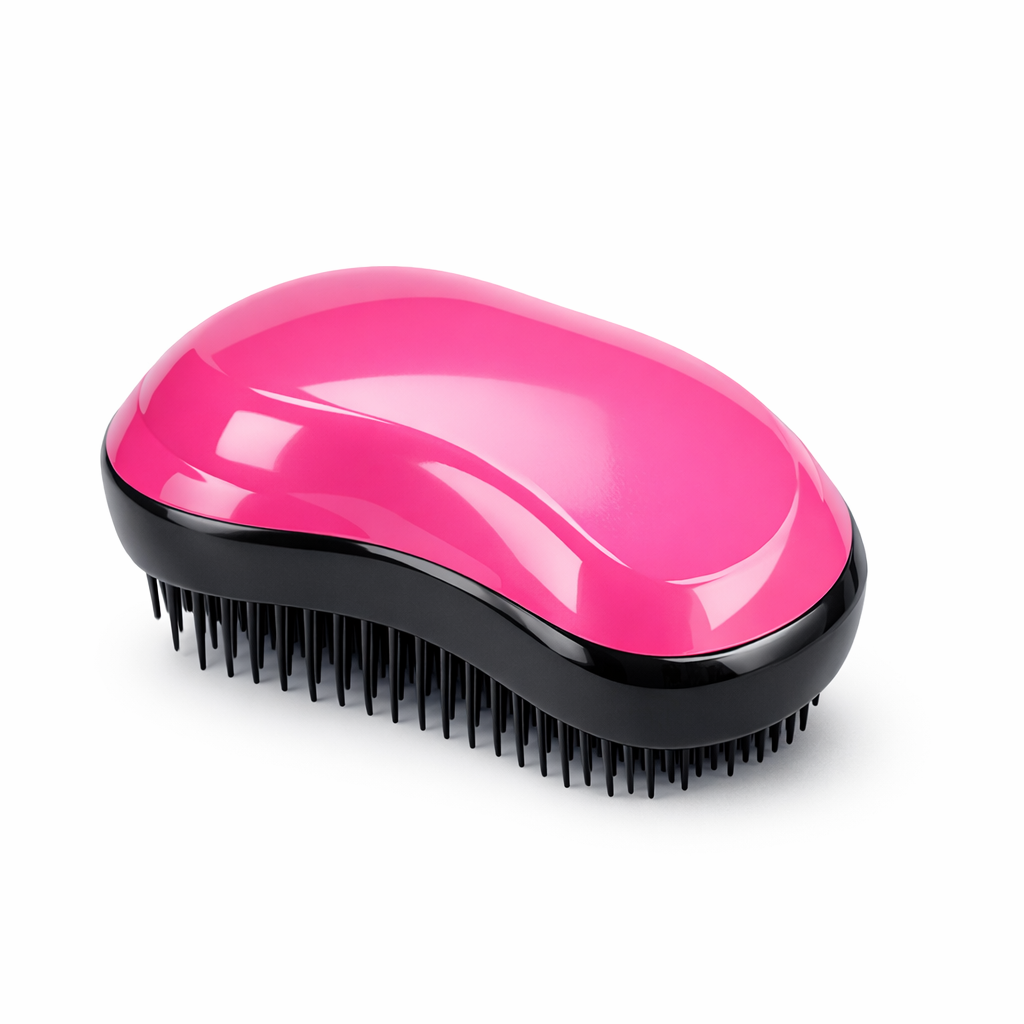
Tangle Teezer Original Detangling Brush
Skip it if your hair is very dense, very textured, or you need handle leverage more than palm control.
You might also like: How to Stretch Curly Hair with Banding Without Heat.