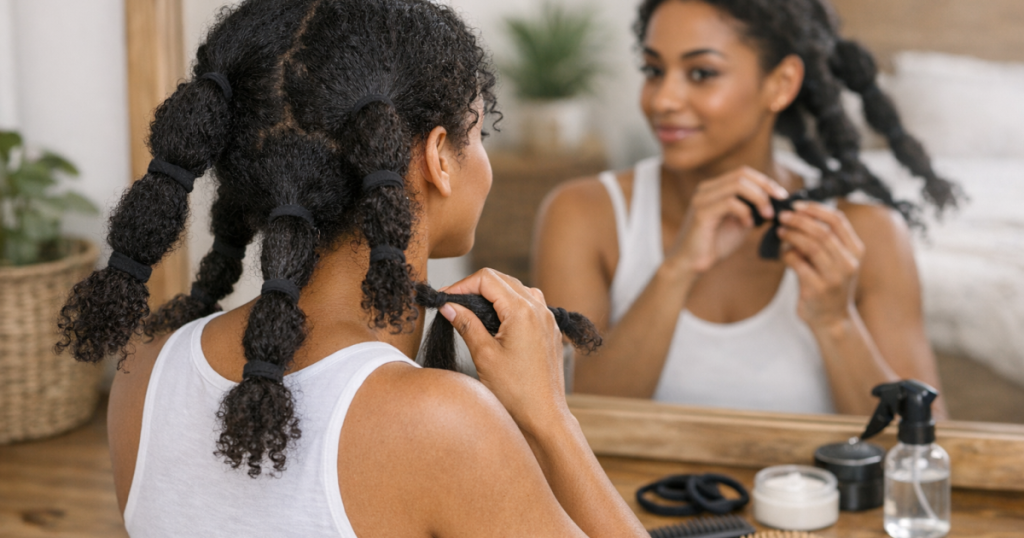
Banding curly hair is a simple heatless stretching method that uses soft hair ties placed down the length of damp or nearly dry sections. It helps reduce shrinkage, elongate curls and prep hair for ponytails, twist-outs, buns or a smoother next-day shape without reaching for a dryer or straightener.
The trick is not to pull the hair as tight as possible. A good banding routine uses the right section size, gentle tension and enough drying time so the hair stretches without dents, frizz or scalp discomfort.
The short version
- Start with detangled, moisturised hair that is damp rather than dripping wet.
- Use soft, snag-free bands and avoid tight elastics that pinch the strand.
- Make smaller sections for dense, coily or high-shrinkage hair; use larger sections for looser curls.
- Leave a little space between each band so the hair can dry and lengthen evenly.
- Remove bands only when the hair is fully dry, then separate with lightly oiled fingers.
What banding actually does to curls
Banding stretches hair by holding each section in a gently elongated position while it dries or sets. Unlike a blow-dry with a comb attachment, it does not smooth the cuticle with heat and airflow; instead, it reduces shrinkage by changing the way the curl dries.
This makes it useful when you want more length but still want your texture to feel like your own. It will not create a sleek silk-press finish, and it will not make tight coils behave like loose waves. What it can do well is soften the shape, reduce root shrinkage and make styles such as low buns, stretched wash-and-gos, twist-outs and braid-outs easier to manage.
If you are deciding between stretching, setting or smoothing, it helps to start with the finished look rather than the tool. Our guide on planning your hairstyle before choosing a hair tool is a useful next step when you are not sure whether you need stretch, curl definition or a smoother blow-dry-style finish.
What you need before you start
You do not need a complicated kit, but the items you choose affect comfort and frizz. Gather everything before your hair starts drying unevenly.
- Soft hair bands: Fabric-covered, satin-covered or seamless bands are kinder than exposed rubber elastics. A fabric-covered option such as invisibobble SPRUNCHIE can work well on larger sections, while smaller soft bands suit shorter or denser hair.
- A detangling brush or wide-tooth comb: Detangle thoroughly first so the bands do not trap knots. A brush such as the Tangle Teezer Naturally Curly Detangling Brush is one recognisable example designed for textured hair detangling, though your usual wide-tooth comb may be enough.
- Leave-in conditioner or styling cream: Use whatever already works for your curl pattern. The aim is slip and moisture, not a heavy coating.
- Light oil or serum: Optional, but helpful for taking bands down with less friction.
- A satin or silk scarf: Useful if you are leaving the bands in overnight or want to reduce frizz while the hair sets.
Step-by-step: how to band for stretch
1. Start with clean, conditioned hair
Banding works best when the hair is moisturised and flexible. After washing or refreshing, apply your leave-in conditioner and styling product as normal. Avoid overloading the hair with butter or heavy gel if your goal is a soft stretched finish, because excess product can slow drying and leave sections feeling stiff.
For hair that tangles easily, deep condition first or use a product with good slip. If your curls feel rough after frequent heat styling, a repairing mask can make the process easier; our Briogeo Don’t Despair, Repair! mask review explains where a treatment mask fits after heat-heavy routines.
2. Dry to damp, not soaking wet
Soaking wet hair takes much longer to dry inside the bands and is more likely to end up with dents. Blot with a microfibre towel or cotton T-shirt until the hair is damp and no longer dripping. If your hair is very dense or low porosity, let it air-dry for a short while before sectioning.
A good test is to squeeze one section gently. If water runs out, wait. If the section feels cool, flexible and hydrated but not wet enough to drip, it is ready.
3. Choose section size by hair type
Section size is where most banding results are won or lost. Too much hair in one banded section can dry puffy in the middle. Too many tiny sections can create unnecessary dents and take longer to remove.
- Loose curls and waves, around 2c to 3a: Use 4–6 medium sections. Keep tension light so the curl pattern does not collapse into stringy bends.
- Springy curls, around 3b to 3c: Use 6–10 sections depending on density. Smooth each section with your hands before adding bands.
- Coily hair, around 4a to 4c: Smaller sections usually give a more even stretch. Work in 8–16 sections if your hair is dense, tightly coiled or prone to root shrinkage.
- Fine curls: Use fewer bands and less product. Heavy creams and tight spacing can leave obvious marks.
- Thick or high-density hair: Prioritise drying access. More sections often look better than one or two bulky ponytails.
4. Place the first band away from the scalp
Gather one section and smooth it downwards with your fingers or brush. Place the first band a little away from the scalp rather than tight at the root. This avoids pulling and helps the root dry with a softer lift.
The band should hold the hair in place, not feel like it is tugging. If you feel scalp tension, headaches or a pinched sensation, remove it and re-band more loosely. Stretch comes from the hair drying in an elongated shape, not from force.
5. Add bands down the length
Continue adding bands along the section, spacing them roughly 2–4 cm apart. Shorter hair may need closer spacing; longer hair can often handle wider gaps. Keep the section lightly stretched as you work, but do not yank the ends.
For more root stretch, keep the first half of the section smoother and slightly more elongated. For softer ends, leave the last few centimetres unbanded so the curl can spring back naturally. This is especially helpful if you want stretched length without a blunt, crimped-looking finish.
6. Let the hair dry completely
Drying time depends on density, product amount, humidity and how wet the hair was at the start. Overnight banding is common, but it only works well if the hair is not too wet before bed. Cover with a satin or silk scarf to reduce friction and keep sections tidy.
If your hair takes a long time to dry, try banding earlier in the day or using fewer heavy styling products. Removing the bands while the hair is still damp can cause the curl to shrink back quickly and may leave the roots puffy.
7. Take down slowly
Rub a tiny amount of light oil or serum between your fingertips, then unwind each band carefully. Do not drag bands down the hair shaft, as this can rough up the cuticle and create frizz. Once all bands are out, gently shake the roots or use your fingertips to separate sections.
If you want a fuller look, separate more. If you want maximum length, separate less and avoid combing through. For a smoother overnight finish after banding, wrapping can help; see our tutorial on wrapping hair overnight for a smooth blow-dry finish for a different no-heat way to preserve shape.
How banding compares with other heatless stretching methods
Banding is not the only way to stretch curls without heat. The right method depends on whether you care most about length, smoothness, definition or comfort.
- Banding: Best for noticeable stretch, shrinkage control and preserving some texture. It can leave dents if bands are too tight or too close together.
- Twists or braids: Better when you want a defined pattern as well as stretch. They may not stretch roots as much as bands.
- African threading: Excellent for stronger elongation on coily hair, but it takes more practice and can feel firmer if wrapped too tightly.
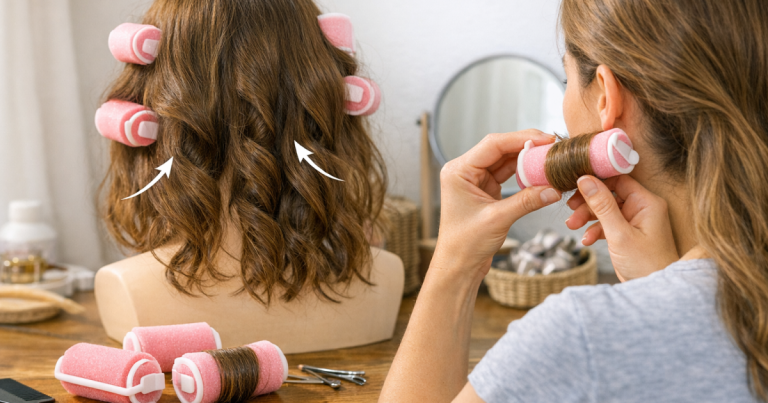
- Rollers: Useful for volume, bend and smoother ends, but they change the shape more than banding does.
- Silk or satin heatless curlers: Better for forming waves or curls while reducing friction. If your main question is fabric and finish, compare silk vs satin heatless curlers before choosing a setting method.
Common banding problems and how to fix them
The hair looks dented
The bands were probably too tight, too close together or removed before the hair was fully dry. Next time, use softer bands, increase the spacing slightly and leave the ends looser. Fine hair and looser curls usually show band marks more easily than dense coils.
The roots are still puffy
Your sections may have been too large, or the first band may have sat too far down the section. Try smaller parts and smooth the root area before banding, but keep the band comfortable. You can also pair banding with a flat twist at the front hairline if that area shrinks fastest.
The ends look dry or stretched out
Leave the final few centimetres unbanded, add a little leave-in to the ends before setting, and avoid pulling the section too firmly. If the ends are already fragile, banding will show that dryness rather than hide it.
The style shrinks back quickly
The hair may not have dried fully, or your product may be too water-heavy for long-lasting stretch. Humid weather can also make curls rebound faster. For a longer-lasting result, start with damp rather than wet hair and finish with a lightweight sealing product that suits your texture.
Questions people ask
Is banding curly hair safe to do overnight?
Yes, provided the bands are soft and not tight at the scalp. Hair should be damp rather than soaking wet, and a satin or silk scarf can help reduce friction while you sleep.
Can banding replace blow-drying with a comb attachment?
It can replace heat stretching when you want a gentler routine, but it will not give the same smooth, airflow-polished finish. Choose banding for length and reduced shrinkage, not a salon-style blow-dry result.
Should I band freshly washed hair or old hair?
Freshly washed, conditioned hair gives the most even stretch. You can also band lightly misted old hair to refresh length, but avoid making it too wet unless you have time for it to dry fully.
How long should I leave the bands in?
Leave them in until the hair is completely dry. For some curls that may be a few hours; for dense coily hair it may be overnight or longer daytime drying, depending on product and moisture level.
Can I use normal hair elastics?
Avoid bare rubber or tight elastics because they can snag and leave harsh marks. Soft, covered or seamless bands are usually more comfortable and easier to remove cleanly.
Why it matters
Heatless stretching is not about forcing curls into a different texture. It is about giving you more control over shrinkage, shape and styling time while keeping heat exposure lower. When the sections are right and the tension is gentle, banding can make curly and coily hair easier to style without flattening its character.
Start with a small number of sections on a day when you are not rushing, then adjust the spacing and drying time the next time you try it. Your best result will come from matching the method to your density, curl pattern and final style rather than copying someone else’s exact routine.