Holiday styling needs to survive real travel conditions, not just look good in a bathroom mirror. The decision between heatless curling rods vs travel curlers usually comes down to drying time, luggage space and how polished you want the result to look after a flight, pool day or humid evening out.
The short version
Heatless curling rods are usually the better holiday option if you want soft waves with minimal effort, have time to let hair set fully, or prefer not to use mains-powered tools abroad. They are light, easy to pack and useful for second-day hair, but they need the right level of dampness and enough setting time.
Travel curlers are better when you need a faster, more controlled finish, have shorter layers or a fringe, or want to refresh a few pieces before dinner. They take up more room, can raise voltage and adaptor questions, and still expose the hair to heat, so they work best when you use them deliberately rather than every day of the trip.
- Choose heatless rods for relaxed waves, overnight setting, beach holidays and low-maintenance packing.
- Choose travel curlers for precise curls, short sections, evening polish and last-minute touch-ups.
- Pack both only if your hair is hard to style, your holiday includes different dress codes, or you genuinely use both methods at home.
How each option behaves on holiday
Heatless curling rods
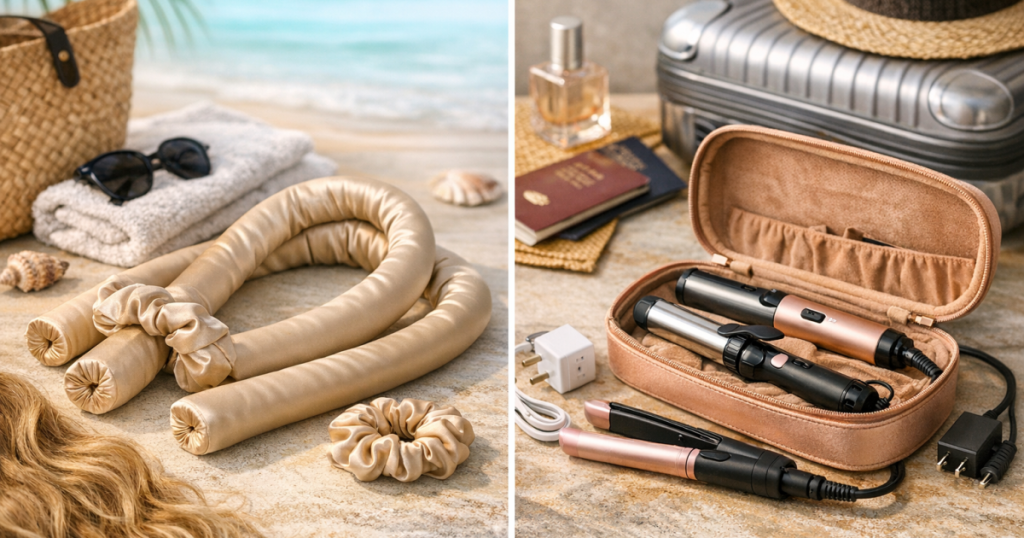
A satin or fabric-covered curling rod bends hair around a soft form while it dries or cools into shape. On holiday, that makes it particularly useful after a shower, swim rinse or evening wash. It can also be gentler on colour-treated, bleached or heat-tired hair because the shape comes from time and tension rather than a hot barrel.
The trade-off is predictability. If hair is too wet, it may still feel damp in the morning. If it is too dry or slippery, the wave may drop quickly. Fine hair can collapse at the roots if wrapped too tightly, while very thick hair may need smaller sections and longer setting time. Recognisable examples include the Kitsch Satin Heatless Curling Set and the Mermade Hair Heatless Curls Kit, but the key checks are the fabric feel, rod length, how securely it ties, and whether it suits your hair length.
Travel curlers
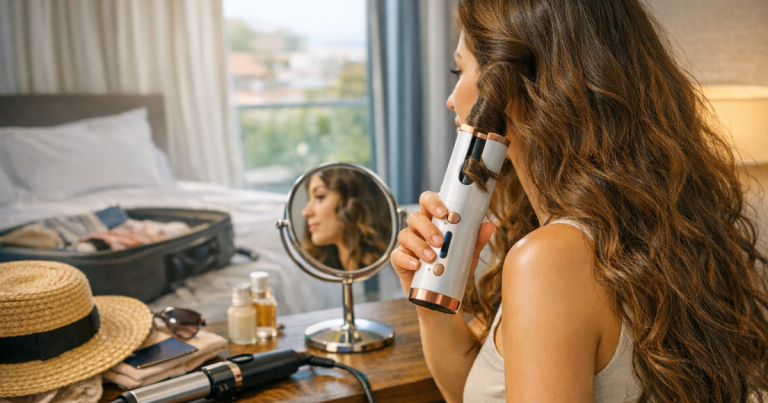
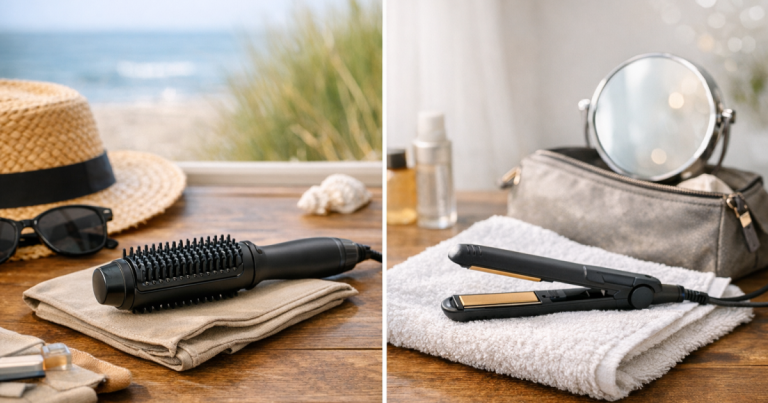
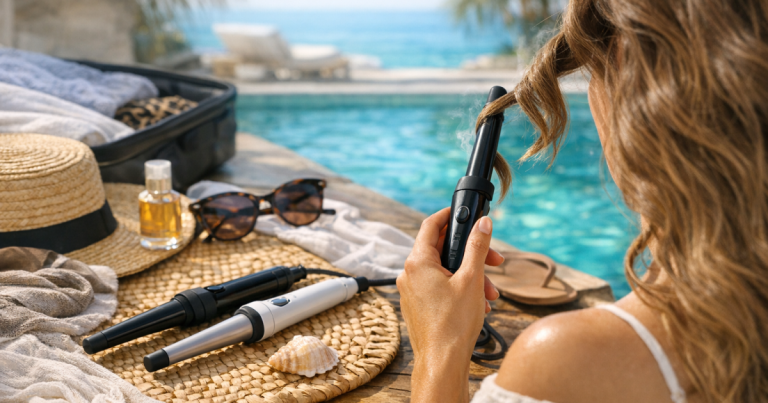
A travel curler gives a more deliberate curl pattern and can rescue hair that has gone fluffy, flat or kinked in a suitcase. It is useful for shaping face-framing pieces, smoothing a flicked-out end, or adding definition to hair that has been air-dried but not styled.
The downsides are practical rather than dramatic: it takes luggage space, needs a suitable socket set-up, and can be awkward in a small hotel bathroom. If you are going abroad, check the voltage information on your own tool before packing and read the difference between a plug adaptor and a voltage converter for hair tools abroad. A plug adaptor only changes the plug shape; it does not automatically make an incompatible tool safe or suitable to use.
Step 1: start with your holiday routine, not the tool
The most useful question is not which method creates the prettiest curl at home. It is how your hair will actually be washed, dried and styled while you are away.
- For beach or pool holidays: heatless rods often make more sense because hair may be washed or rinsed frequently. Set them on towel-dried hair in the evening, then loosen the waves in the morning with fingers rather than a brush.
- For city breaks: travel curlers can be handy because you may want a polished finish quickly before dinner, without sleeping in a styling tool.
- For cabin luggage only: a soft heatless rod usually packs flatter and weighs less than a heated tool, though the shape can still be bulky if the rod is thick.
- For weddings or formal trips: a travel curler gives more control around the front and ends, but heatless rods can still work well if you practise the set before you leave.
- For humid destinations: neither option is magic. Heatless sets need full drying time, while heated curls need careful cooling before you touch them. A small amount of anti-frizz styling product can help, but avoid overloading the hair.
Step 2: match the method to your hair type
Fine or flat hair
Fine hair often likes heatless rods because the result can look soft and airy, but the roots need attention. Start the wrap slightly away from the scalp if you want movement without a flattened crown. Use smaller sections for a stronger wave and avoid heavy oils before setting, as they can make the curl slip out.
A travel curler is useful for fine hair when you need lift at the front or want a more defined bend. Let each curl cool before separating it. If your fine hair drops quickly, a full head of tight curls may not last as well as a few strategic bends around the face and mid-lengths.
Thick or dense hair
Thick hair can look beautiful with heatless rods, but only if it has enough time to dry. Wrapping large, damp sections around one rod often leaves the inner hair slightly wet, which means the shape falls out. Work with barely damp hair, split the hair evenly, and consider whether your length needs a longer rod or an additional soft curler.
Travel curlers can create stronger definition on thick hair, but they may take longer because sections need to be smaller. If you are packing for a short trip, be realistic: a tool that takes too long at home will not suddenly feel quick in a hot hotel room.
Curly, coily or frizz-prone hair
For curly and coily textures, heatless rods can be useful for stretching, reshaping or creating a looser wave pattern, especially when hair has already been moisturised and detangled. Keep the wrap smooth and avoid rough removal, as friction can disturb the curl surface.
Travel curlers are best used selectively on these textures, such as on stretched hair or a few pieces that need evening definition. Repeated heat on holiday, especially after sun, swimming or extra washing, can make dryness more noticeable. If frizz is your main challenge and you sometimes use warm airflow rather than a clamp or wand, the technique principles in using a hot air brush on frizz-prone hair without puffiness are also relevant: smooth the section first, use controlled tension, and avoid overworking the same area.
Short hair, layers and fringes
Heatless rods are easiest on hair with enough length to wrap securely. On short bobs, layered cuts or grown-out fringes, the ends may flick out unless you wrap carefully and secure them neatly. Smaller soft rollers, mini rods or pin-curl style methods can sometimes be easier than one large robe-style rod.
A travel curler gives more precision on shorter pieces. It can bend a fringe, tidy the front layers or reshape the ends of a bob. The key is not to curl every piece identically; a few controlled sections usually look more modern and less overdone.
If you are unsure whether your cut has enough length for rods, this breakdown of how hair length changes tool choice by hair type is a useful next step before you pack.
Step 3: pack the right supporting pieces
The styling method matters, but the small extras often decide whether holiday hair behaves. Keep the kit lean and specific to your routine.
- For heatless rods: pack soft scrunchies or snag-free ties, a few sectioning clips, and a lightweight product that gives slip or hold without making hair greasy.
- For travel curlers: pack a heat-resistant pouch if supplied or suitable for your tool, sectioning clips, and the correct plug adaptor for your destination.
- For frizz-prone hair: use a microfibre towel or soft T-shirt to remove excess water before setting. Hair that is dripping wet rarely sets neatly.
- For thick hair: bring enough clips to divide hair properly. Two rushed sections around a rod will not behave like six clean sections.
- For curls that collapse: let the finished shape cool or dry fully before brushing, shaking out or adding finishing product.
Step 4: use the method that fits the day
For a low-effort overnight wave
Wash or lightly mist the hair in the evening, then dry it until it is only slightly damp. Apply a small amount of styling product if your hair needs hold. Part the hair where you want it to sit, wrap each side smoothly around the rod, secure without pulling at the roots, and sleep on a smooth pillowcase if you can. In the morning, unwind gently and separate with fingers.
For a quick evening refresh
If your hair still has a base wave from the day before, do not restyle the whole head. Use a travel curler only on the front, crown pieces or ends that have lost shape. Let each piece cool in your hand or against the shoulder before separating. This gives a more intentional finish without turning your holiday routine into a full salon-style session.
For moving from heat to heatless while away
If you normally rely on curling tongs, practise before the trip rather than making the switch on the first night. Heatless rods need different sectioning, dampness and timing. The routine in switching from curling tongs to heatless curls without losing shape is especially useful if you want holiday waves that still feel styled rather than accidental.
Common holiday hair mistakes to avoid
- Wrapping hair too wet: this is the main reason heatless curls feel limp, uneven or still damp in the morning.
- Taking sections that are too large: large sections may look quicker, but they usually give weaker shape, especially on dense hair.
- Forgetting your destination set-up: a heated tool is only useful if it is compatible with the place you are staying and practical to use there.
- Brushing too soon: both heatless and heated curls need time to settle. Use fingers first, then a wide-tooth comb only if the shape is too tight.
- Packing for fantasy hair: if you never spend 40 minutes curling your hair at home, you probably will not want to do it after a long travel day.
Common questions
Are heatless curling rods comfortable enough to sleep in on holiday?
Many people find soft satin rods comfortable, but it depends on the rod thickness, your sleeping position and how tightly you secure the ends. Try one night at home before relying on it for a trip.
Can I use heatless rods on wet hair after swimming?
Rinse first, detangle gently, then let the hair dry until only slightly damp. Wrapping very wet hair can leave it damp by morning and may make the finished wave look stretched rather than bouncy.
Is a mini travel curler worth packing for long hair?
Only if you plan to use it for touch-ups or smaller face-framing sections. Very long or thick hair can take a long time with a compact barrel, so a heatless set may be more practical for the full head.
Which option is better for a weekend city break?
A travel curler is useful if you want fast polish for evenings. If you prefer a lighter bag and more relaxed waves, a heatless rod is usually easier to justify for a short trip.
Do I need both for a holiday wedding?
Possibly, but only if you have tested the routine. Heatless rods can create the base shape overnight, while a travel curler can refine the front pieces before the event.
What stands out
Heatless rods are the most travel-friendly choice when your priority is low effort, less heat exposure and soft holiday waves. They suit relaxed itineraries, longer setting windows and hair that responds well to overnight styling. Travel curlers suit more polished plans, shorter pieces and last-minute fixes, but they need more thought around packing, sockets and how much heat your hair can tolerate while you are away.
The best holiday hair routine is not necessarily the most glamorous one; it is the one you will actually repeat without fuss. If your trip involves sea, humidity, walking, late dinners and limited mirror time, choose the method that makes your hair easier on day two, not just prettier on day one.
Quick Buying Links
Heatless Curling Rods
The decision between heatless curling rods vs travel curlers usually comes down to drying time, luggage space and how polished you want the result to look after a flight, pool day or humid evening out.The short versionHeatless curling rods are usually the better holiday option if you want soft waves with minimal effort, have time to let hair set fully, or prefer not to use mains-powered tools abroad.
Travel Curlers for Holiday Hair
Worth considering if its strengths better match your needs.