Fine hair can take a curl beautifully, but it often drops before breakfast unless the prep is balanced: enough grip to hold, not so much product that the hair collapses. The secret to heatless curls for fine hair is starting with clean, lightly conditioned, nearly dry hair and choosing a setting method that does not squash the roots.
Think of prep as the difference between a curl that looks pretty for twenty minutes and a shape that still has movement at the end of the day. Fine strands usually need less moisture, more structure and gentler handling than thicker hair.
At a glance
- Start with clean roots; oil and leftover styling cream make fine hair fall faster.
- Condition only where needed, usually mid-lengths and ends, then rinse thoroughly.
- Use lightweight hold before setting: mousse, foam, setting spray or a very light texturising mist.
- Set the hair when it is mostly dry, not soaking wet, unless your hair is naturally wavy and needs a little extra moisture to reform.
- Use smaller sections than you think; big sections create a soft bend rather than a lasting curl.
- Let the set dry completely before removing your curler, rollers or wrap.
Why fine hair drops so quickly
Fine hair has a smaller strand diameter, so it can be easily overloaded by conditioner, oil, heavy leave-in cream or too much styling product. It may also feel smooth and silky, which is lovely for shine but not always helpful for curl longevity. Without enough texture or hold, the hair simply slips out of the shape.
Density matters too. Fine hair can be low-density, medium-density or thick in quantity. Low-density fine hair often needs root lift and very light product. Dense fine hair may need firmer sectioning and a stronger setting product, but it can still collapse if the ends are weighed down.
The other issue is drying time. If fine hair is wrapped while too wet, it can dry flat against the head or stay damp inside the curl. If it is wrapped when bone dry with no styling support, the result can loosen quickly. For a fuller explanation of the finish you can expect from different methods, this comparison of heatless and heated styling for your desired finish is a useful next step.
Step 1: wash for lift, not just softness
Long-lasting heatless curls begin in the shower. Fine hair usually holds shape better when the scalp is clean and the roots are free from build-up. Use shampoo mainly at the roots and let the lather run through the lengths as you rinse. If your hair gets oily quickly, a double shampoo can help before an overnight set, but only if your scalp tolerates it.
Conditioner should be targeted. Apply it from the ears down, or just on the ends if your hair is very fine or short. Rinse until the hair feels clean rather than coated. A silky film can make the hair feel nice at first, but it often causes the curl to unwind.
If your fine hair is dry or highlighted
Do not skip conditioning completely if your ends are porous, bleached or prone to tangling. Instead, use less product and apply it only where the hair needs slip. A lightweight mask used occasionally can help the ends behave, but heavy treatments immediately before a curl set can reduce hold. For curl longevity, softness should support the style, not flatten it.
Step 2: remove excess water properly
After washing, blot the hair with a microfibre towel or soft cotton T-shirt. Avoid rough towel-drying, which can roughen the cuticle and create fluffy ends. Fine hair does not need to be dripping wet for most heatless methods; in fact, too much water is one of the biggest reasons curls fall limp.
Before adding styling product, the hair should be damp rather than wet. If water is still running down your neck, wait. If your roots are wet but your ends are drying, gently lift the roots with your fingers and let them air-dry for a few minutes before sectioning.
Step 3: add hold before the curl goes in
Fine hair normally needs styling support before it is wrapped, rolled or twisted. Product added afterwards can polish the finish, but it cannot fully build the structure that was missing during the set.
Good options include:
- Lightweight mousse or foam: useful for soft volume, bend and hold without a heavy feel. Work it through damp lengths, then comb lightly to distribute.
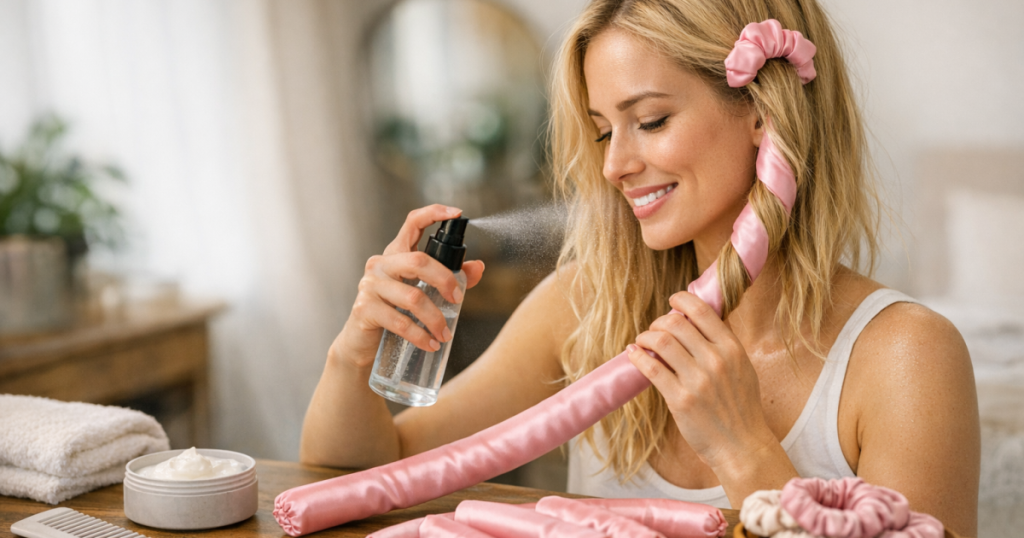
- Setting spray: helpful if your hair is very silky or resistant. Mist lightly through the mid-lengths rather than soaking the roots.
- Volumising spray: best at the roots if your main problem is flatness around the crown.
- Texturising mist: useful for slippery hair that needs grip, but use sparingly if your ends get dry.
- Leave-in conditioner: use only a tiny amount on fragile ends; too much can soften the curl out before it has set.
As a rough starting point, fine shoulder-length hair may only need a small palmful of foam or a few light sprays of setting product. If the hair feels sticky, coated or stringy before you wrap it, you have probably used too much. Brush or comb through once so the product is even, then stop touching it.
Step 4: choose the right dampness level
The best dampness level depends on your natural texture. Fine straight hair usually sets best when it is around 85 to 95 per cent dry: cool to the touch, flexible, but not wet. Fine wavy hair may prefer slightly more moisture so the existing wave pattern can join the curl. Fine curly hair often needs controlled moisture and a light hold product to avoid frizz, but the roots still should not be saturated.
A simple test is to wrap one front section. If it feels wet against the curler, wait longer. If it slides off and will not hold tension, mist the section lightly with water or setting spray. The aim is workable hair, not damp fabric.
Step 5: match the method to the result you want
Prep is only half the story. Fine hair also needs the right setting method because the wrong tool can flatten the roots or create a curl that is too loose to last.
- Satin heatless curling rod: good for soft, modern waves and a smoother surface. Choose smaller sections if your hair struggles to hold.
- Robe belt or soft wrap: useful for relaxed bends, but it can be too loose for very silky hair unless you add grip first.
- Foam rollers: better for more defined curls and shorter layers, provided they are not wound too tightly at the root.
- Velcro rollers: helpful for lift, curtain fringes and crown volume, though they create more bounce than spiral curl.
- Flexi rods: useful when you want a firmer curl pattern, but small rods can look too ringlet-like if you brush them out too soon.
If you are still working out which method suits your texture, the guide to styling tools by hair type gives a broader view of heat, hold and heatless options.
Step 6: section fine hair with intention
Large sections are quick, but they rarely give fine hair enough structure. Smaller sections dry more evenly and create a stronger memory in the hair. Start by splitting the hair down the centre or slightly off-centre, depending on where you normally wear your parting. Then work in neat sections from the front to the back.
For face-framing pieces, wrap away from the face for a softer opening around the cheekbones. For flatter roots, lift each section slightly upwards before wrapping so the root does not dry plastered to the scalp. Keep the ends smooth as you wrap; crumpled ends are much harder to fix once the set is dry.
For layers, fringes and shorter front pieces
Layered fine hair needs extra care because shorter pieces can spring out of the wrap. Use a smaller section at the front, add a light mist of setting spray, and tuck the ends cleanly. If your layers never seem to sit evenly after a heatless set, the Octocurl heatless curler review for layered hair is worth reading for a more specific look at section control.
Step 7: secure without crushing the roots
Fine hair is easily dented by tight elastics, clips and bulky scrunchies. Use soft scrunchies, snag-free clips or fabric ties, and secure the ends firmly enough that they stay put without pulling. If you are sleeping in the set, keep the fastening away from pressure points so you are not lying on a hard clip.
Root direction matters. If every section is pulled downwards, the finished curl may start low and leave the crown flat. For more lift, direct the front sections slightly up and back, and avoid wrapping the top layer too tightly against the scalp.
Step 8: let it dry completely before taking it down
This is the step that tests patience. Fine hair can feel dry on the outside while the inner wrap is still slightly damp. If you remove it too soon, the curl will look good for a few minutes and then lengthen rapidly.
Before taking the set down, touch the thickest wrapped areas and the ends. They should feel dry and room temperature, not cool or clammy. If you set your hair in the evening and it is still damp in the morning, use less water next time, start with drier hair, or choose smaller sections.
Step 9: release, separate and finish lightly
When removing the curler or rollers, unwind rather than pulling. Let the curls sit for a minute before separating them. Fine hair often looks too perfect at first, but aggressive brushing can turn a lasting curl into a soft wave immediately.
Use your fingers to separate each curl into smaller pieces. For more volume, tip your head slightly and lift at the roots with your fingertips. If you need polish, smooth a tiny amount of lightweight serum over the ends only. Keep oils away from the roots unless your hair is coarse as well as fine.
Finish with a light mist of flexible hairspray if your hair drops quickly. Spray from a distance and move the can as you mist; concentrated spray can make fine hair stiff in one patch and limp everywhere else.
Prep tweaks by fine-hair type
- Fine, straight and silky: prioritise mousse, texturising spray and smaller sections. Set when almost dry.
- Fine and oily at the roots: wash close to styling time, keep conditioner off the scalp and avoid leave-in product near the crown.
- Fine and dry at the ends: condition the last few centimetres well, then add hold through the mid-lengths so softness does not become slipperiness.
- Fine and wavy: use enough moisture to encourage the wave, but keep roots light. A foam usually works better than a rich curl cream.
- Fine, low-density hair: focus on root lift and avoid heavy wrapping methods that pull the hair flat overnight.
- Fine hair with a fringe: set the fringe separately or refresh it in the morning; it usually needs less product and less drying time than the rest of the hair.
Common prep mistakes that shorten the style
- Using a rich mask immediately before styling: save heavier treatments for days when you are not relying on curl hold.
- Wrapping hair while too wet: this can leave the roots flat and the curls under-set.
- Skipping hold product completely: very soft, clean hair often needs a styling base to keep its shape.
- Making sections too large: large sections create loose movement rather than defined, long-lasting curls.
- Brushing straight after removal: finger-separate first, then decide whether the style needs more softening.
- Adding oil too early: oil can make fine hair look glossy, but it can also pull the curl down.
FAQ
Should fine hair be clean or slightly dirty for heatless curls?
Clean hair usually works better if your roots get oily or flat. If freshly washed hair is too slippery, add light mousse, setting spray or texturising mist rather than relying on build-up.
Is it better to sleep in heatless curls or set them during the day?
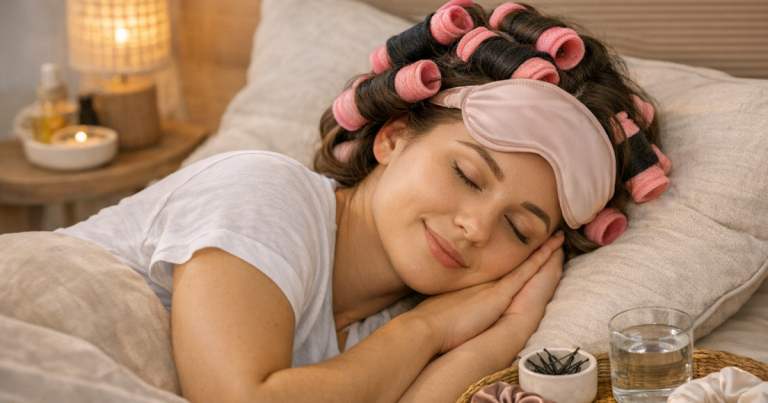
Overnight sets are convenient, but daytime setting can work well if your hair dries quickly. The key is complete dryness before removal, not the number of hours alone.
Why do my heatless curls look flat at the crown?
Your roots may be too wet, too conditioned or wrapped downwards. Dry the roots more before setting and lift each top section slightly as you wrap.
Can I use curl cream on fine hair?
You can, but use a very small amount and keep it away from the roots. For many fine hair types, foam or mousse gives better hold with less weight.
How do I make the curls last into the next day?
Sleep with the hair loosely gathered in a silk or satin wrap, then refresh flattened sections with a light mist of water or setting spray. Avoid reapplying heavy product.
What stands out
Fine hair does not need more product; it needs better product placement, cleaner roots, controlled dampness and enough time to set fully. If your curls keep falling out, change one variable at a time: start drier, use smaller sections, add a lighter hold product, or switch to a method that gives more definition.
The most reliable routine is simple: wash for lift, condition only where needed, blot gently, add lightweight hold, set when mostly dry, and remove only when every section is fully dry. Once that base is right, heatless curls on fine hair become far more predictable, wearable and long-lasting.