Frizz after blow-drying is rarely just a product problem; it is usually a mix of moisture, tension, direction and the attachment you choose. The Dyson Airwrap smoothing brush can help flatten flyaways and soften volume, but the soft and firm versions behave differently on different hair types. If your finish looks fluffy, stretched-out or still fuzzy at the roots, the issue is often whether the bristles are gripping enough without overworking the hair.
The short version
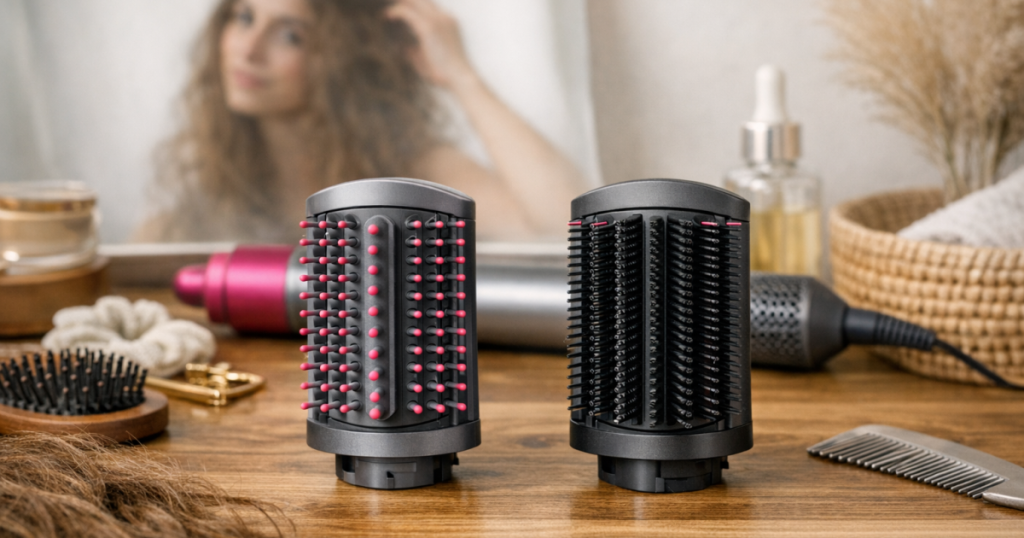
Use the soft smoothing brush if your hair is fine, fragile, lightly wavy or prone to going limp when too much tension is used. It gives a gentler, more cushioned finish and is better when you want smoothness without flattening all natural movement.
Use the firm smoothing brush if your hair is medium to thick, coarse, dense, wavy, frizz-prone or resistant at the roots. The firmer bristles create more tension, which helps stretch the hair cuticle smoother and gives a more polished blow-dry effect.
If your hair is fine but frizzy, start with the soft brush and improve your sectioning, drying level and finishing direction before moving to the firm brush. If your hair is thick and still expands after styling, the firm brush is usually the more useful attachment.
How the two attachments behave on frizz
The Dyson Airwrap multi-styler uses airflow with styling attachments rather than clamping hair between hot plates. With the smoothing brushes, frizz control comes from three things working together: airflow, bristle tension and the direction you brush the hair while it dries.
The Dyson Soft Smoothing Brush has a gentler feel through the hair. It is useful when your hair becomes static, puffy or too straight-looking with firm brushing. It can still smooth, but it does not pull the hair as taut, so very coarse or dense roots may need smaller sections and more passes.
The Dyson Firm Smoothing Brush gives stronger control. It is better at stretching waves, calming bulky side sections and smoothing the canopy of hair that catches damp UK weather. The trade-off is that it can make fine hair look flat if you use it with too much downward pressure or start too wet.
Which one should you use for your hair type?
- Fine, straight hair: choose the soft brush first. Use light tension and lift at the roots before smoothing the mid-lengths. The firm brush can collapse volume unless you use it only on the surface layer.
- Fine but frizz-prone hair: use the soft brush for most of the head, then try the firm brush only on the halo area, hairline or stubborn crown pieces. Keep sections narrow so you do not need repeated passes.
- Medium wavy hair: start with the firm brush if you want a sleeker finish, or the soft brush if you want a more natural bend. Your prep and drying level will make a big difference.
- Thick or coarse hair: the firm brush is usually more effective because it grips enough to stretch the hair smooth. Work in 5–7 cm sections rather than trying to brush through a large panel at once.
- Curly hair that is being smoothed: the firm brush gives more tension, but it will not replace a full salon blow-dry for every curl pattern. Detangle well, rough-dry carefully and work slowly from root to end.
- Bleached, brittle or heat-damaged hair: use the soft brush where possible and avoid repeatedly going over the same dry section. Smoothness should not come at the cost of extra breakage.
How to use the Dyson Airwrap smoothing brush for less frizz
1. Start damp, not wet
Frizz often appears when you try to smooth hair that is either too wet or already fully dry. Aim for hair that is mostly dry but still slightly damp through the mid-lengths. If water is still sitting in the hair, the brush has to work too hard; if the hair is bone dry, you may only be rearranging frizz rather than setting a smoother shape.
2. Detangle before the attachment touches your hair
Knots interrupt airflow and make the brush drag. Use a detangling brush or wide-tooth comb first, then add a light heat protectant or smoothing product through the mid-lengths and ends. Avoid overloading the roots with oil or cream, especially on fine hair, because that can make the finished style look separated rather than sleek.
3. Section more than you think you need to
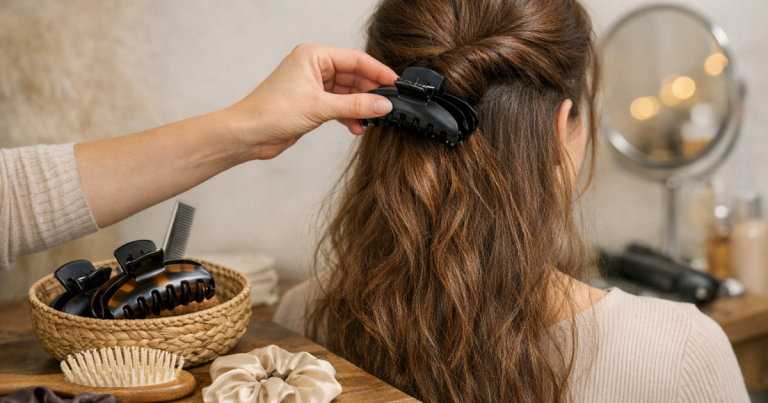
The biggest mistake with smoothing attachments is taking sections that are too wide. The outer layer may look polished while the underside stays fluffy, so the style expands within an hour. Clip the top away, smooth the lower layers first, then finish the visible surface pieces with slower passes.
4. Brush downwards for polish, outwards for body
For a sleek finish, angle the airflow down the hair shaft and move from root to end with steady tension. For smoother volume, lift the roots out from the head first, then curve the ends under. If your hair becomes wide or airy rather than smooth, the troubleshooting principles are similar to using a hot brush: this guide to using a hot brush without making hair puffy is a useful next step.
5. Use the cool shot before you let the section go
Cooling the section helps the smoother shape hold. This is particularly useful around the fringe, temples and crown, where frizz returns quickly. Hold the brush in place for a few seconds, cool the section, then release without immediately touching it.
Soft brush or firm brush for different finishes
The best attachment is not only about frizz level; it is also about the finish you prefer. A polished finish needs more direction and tension. A soft, natural blow-dry needs less tension and a little movement left in the hair. If you are trying to work out whether your routine should look sleek, textured or more undone, this breakdown of choosing styling tools by finish gives useful context.
- For sleek office hair: use the firm brush on medium, thick or wavy hair, then finish with a tiny amount of smoothing product on the ends.
- For soft everyday smoothness: use the soft brush and avoid pulling the hair completely straight. This keeps movement while reducing the fuzzy surface.
- For smooth roots with bouncy ends: use the firm brush near the roots and mid-lengths, then switch to a round brush attachment or curling barrel for shape at the ends.
- For second-day frizz: mist lightly with water or a refresh spray before smoothing. Do not keep brushing dry frizz aggressively, as it can make the surface look rougher.
Common causes of frizz even with the right brush
If neither attachment gives the finish you expected, check the routine before blaming the tool. Frizz control depends on the condition of the hair and the order of styling.
- Your hair is too wet: the brush dries the outside while the inside stays damp, so it swells later.
- Your sections are too large: the bristles cannot reach the inner layers evenly.
- You are brushing upwards at the wrong point: root lift is useful, but the final pass should usually smooth the cuticle downwards.
- You are skipping product entirely: porous or colour-treated hair often needs a light leave-in, smoothing cream or heat protectant to help the surface sit flatter.
- You are touching the hair too soon: running fingers through warm sections can disturb the shape before it sets.
- Your pillowcase or overnight routine is roughing up the surface: a silk or satin wrap can help preserve smoother hair for longer.
When a heatless option may be better
If your main issue is frizz from dryness, bleaching or frequent heat styling, the answer is not always more smoothing passes. Some hair looks better when you alternate heated styling with gentler setting methods, especially overnight curls or waves that reduce daily manipulation. For a frizz-conscious comparison, the Kitsch Satin Heatless Curling Set review is worth reading if you want smoother shape without relying on hot airflow every time.
A sensible routine might be: use the Airwrap attachments when you want a polished blow-dry, then use a satin curler, silk wrap or loose protective style on lower-effort days. This matters most for hair that is colour-treated, naturally dry or prone to snapping around the front pieces.
Common questions
Is the firm smoothing brush too harsh for fine hair?
Not always, but it can be too flattening. Fine hair usually does better with the soft brush first, using the firm brush only on stubborn frizzy areas such as the hairline or crown.
Which brush is better for humid weather?
For medium, thick or coarse hair, the firm brush usually gives better tension against humidity. Fine hair may still prefer the soft brush with a humidity-resistant finishing product.
Can the soft brush smooth curly hair?
It can soften the surface, but it may not give enough stretch for dense curls. If you want a straighter, sleeker result, the firm brush is usually more effective in small sections.
Why does my hair look smooth at first, then frizzy later?
The most common reasons are hidden dampness, sections that were too large, not cooling the hair before release, or using too little tension for your hair texture.
Should I use oil before or after smoothing?
Use heavy oils sparingly and usually after styling, mainly on the ends. Before styling, a lightweight heat protectant or smoothing cream is less likely to make the roots greasy.
Main points
The soft smoothing brush is best for fine, fragile, lightly wavy or easily flattened hair. The firm smoothing brush is better for medium to thick, coarse, dense or more resistant frizz. For many people, the best result comes from mixing both: soft brush for delicate areas, firm brush for the canopy, roots and sections that need more control.
For smoother results, focus on dampness, section size, direction and cooling time. The attachment matters, but the technique is what turns it from a quick brush-through into a frizz-control step that actually lasts.
Quick Buying Links
Dyson Airwrap Soft
A strong contender depending on your priorities.
Firm Smoothing Brush for Frizz
Worth considering if its strengths better match your needs.