Fragile hair can still look polished with a straightener, but the margin for error is smaller: too much tension, repeated passes or styling on damp sections can turn softness into snapping. Using the GHD Platinum+ on fragile hair is less about chasing poker-straight lengths and more about controlled, minimal contact. The aim is to style only the areas that need it, protect the weakest pieces, and know when a heatless finish is the kinder option.
The GHD Platinum+ is a fixed-temperature styler, so you cannot turn it down for very delicate hair. That makes preparation, section size, pass count and styling frequency more important than they would be with a lower-heat or adjustable straightener.
The short version
- Use it only on fully dry hair; damp fragile strands are more vulnerable to heat and tension.
- Apply a suitable heat protectant evenly, then let it dry before styling.
- Work in clean, manageable sections so one slow pass can do the job.
- Avoid clamping tightly, pulling hard or going over the same section repeatedly.
- Leave severely weakened, stretchy, snapping or recently bleached areas alone where possible.
- Use heatless methods between styling days to reduce cumulative stress.
First decide whether your hair should be straightened today
Fragile hair is not one hair type. It can be naturally fine, chemically lightened, colour-treated, sun-exposed, post-extensions, over-brushed, heat-damaged or simply prone to split ends. The right approach depends on what kind of weakness you are dealing with.
Before switching the styler on, run a quick condition check. If your hair feels gummy when wet, stretches unusually before breaking, sheds in short snapped pieces, or has white dots along the ends, skip heat styling on those areas. A smoother finish is not worth worsening structural damage.
If the fragility is mostly at the ends, you may be able to style the top and mid-lengths while leaving the last few centimetres untouched. If the face-framing pieces are weak from colour, bleach or frequent styling, smooth them with leftover warmth only, or shape them using a brush and clips while they cool. For hair that is fragile all over, keep the styler for occasional finishing rather than routine daily styling.
Step 1: Wash and condition with slip, not weight
Straightening fragile hair starts before the plates touch it. Choose a gentle wash routine that leaves the hair soft enough to detangle without coating it so heavily that you need more passes to get a clean finish.
- Use conditioner through the mid-lengths and ends, then detangle gently before rinsing.
- If your hair is fine and fragile, avoid overloading the roots with rich masks before straightening; limp roots can make you restyle more often.
- If your hair is coarse and fragile, a smoothing leave-in can help reduce friction, but keep the layer light and even.
- Blot with a soft towel rather than roughing up the cuticle.
The goal is controlled slip. Hair should feel manageable, not coated, sticky or squeaky. If product build-up makes the plates drag, wash-day prep may need simplifying.
Step 2: Dry thoroughly before using the plates
The Platinum+ is designed for dry styling, so do not use it to “finish drying” damp hair. On fragile hair, steam, sizzling sounds or a hot, wet smell are clear signs to stop. Even if the hair feels nearly dry at the surface, the inner layers around the nape and crown can hold moisture for longer.
Use a low-tension drying method first. Air-dry most of the way if your hair tolerates it, then finish the roots and inner sections with a dryer on a gentle setting. If your hair becomes fluffy during drying, focus on smoothing the direction of the cuticle rather than stretching the hair straight with a tight brush.
For wavy hair that goes frizzy before you even reach for straighteners, drying technique may be the bigger issue. The principles in diffusing wavy hair without making it frizzy are useful even when your final look is smoother, because less frizz at the drying stage means fewer corrective passes later.
Step 3: Use heat protectant properly
A heat protectant is not a licence to over-style, but it does help reduce friction and create a more even styling surface. Mist or distribute it through the hair in layers rather than spraying only the top sheet. Then wait until the hair feels dry again before using the styler.
For fragile hair, evenness matters more than quantity. Too little product leaves some strands exposed; too much can make the hair tacky, which encourages snagging. If the straightener does not glide smoothly, stop and reassess rather than pressing harder.
Step 4: Section by density, not just length
Thick, dense hair usually needs smaller sections, while fine low-density hair can be styled in fewer sections. The point is not to make the session longer; it is to make each pass count.
- Fine, fragile hair: take slim but not see-through sections, use very light tension, and avoid flattening the roots unless you want a sleeker finish.
- Medium-density fragile hair: divide into top, sides and nape, then work in clean horizontal sections so the plates glide evenly.
- Dense or coarse fragile hair: use smaller sections to avoid repeated passes, but keep the movement slow and steady rather than forceful.
- Wavy fragile hair: decide whether you want to smooth the wave pattern fully or simply polish the canopy and face frame.
If you are not sure whether your styling problems come from strand thickness or the amount of hair you have, the breakdown in hair density versus texture will help you section and style more intelligently.
Step 5: Use one controlled pass, not several quick ones
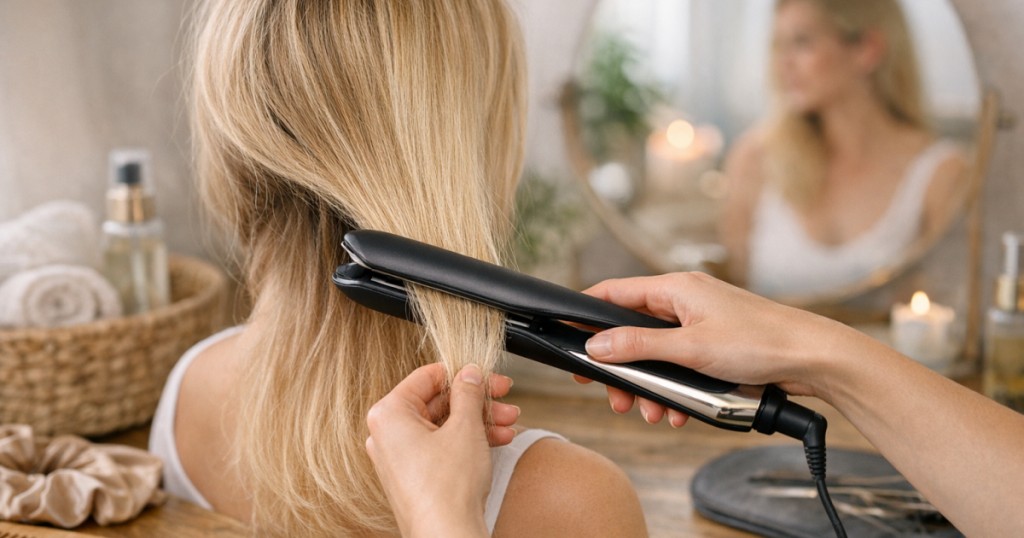
Once the GHD Platinum+ Styler is ready, comb or smooth the section first so the plates do not meet tangles. Place the styler near the area you want to smooth, close it gently, and glide down at a steady pace. Do not squeeze the plates together as if you are ironing fabric; fragile hair responds better to light, consistent contact.
One controlled pass is usually kinder than three rushed passes. If the section is not smooth afterwards, ask why before repeating it. Was the section too thick? Was there product residue? Was the hair not fully dry? Was the angle wrong? Correct the cause rather than repeatedly heating the same strands.
On weaker ends, open the plates slightly as you reach the last few centimetres, or stop before the ends and polish them with a serum once cool. If your ends already look sparse, straightening them flat can make the damage more visible.
Step 6: Match the technique to your finish
For soft straight hair
Follow the natural fall of the hair and keep the styler moving vertically. Do not pull outwards too firmly, as this adds mechanical stress. For fragile fine hair, allow a little bend through the ends so the style looks fuller.
For glassy smooth hair
Only attempt a very sleek look when the hair is in good enough condition to tolerate it. Glass hair usually requires careful drying, neat sectioning and polished finishing, not endless passes. If you need a full sleek finish often, rotate with gentler styles between sessions.
For bends or soft waves
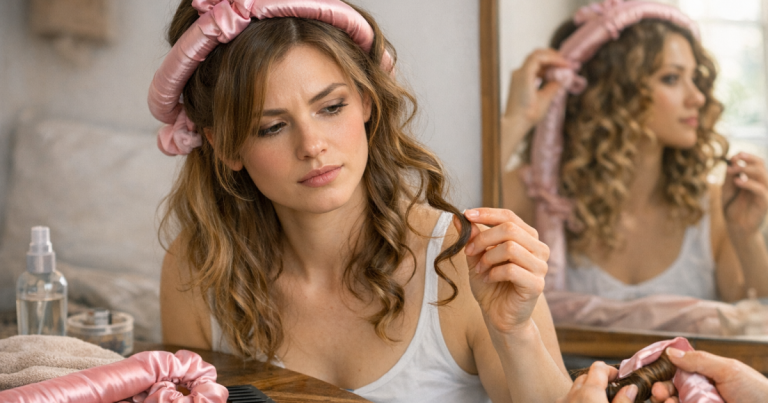
Use a loose C-shape movement rather than clamping and twisting tightly. Fragile hair can crease or snap if you rotate too sharply near weakened areas. For a similar effect with less heat exposure, alternate with rollers, a satin heatless curling rod or pin-setting on non-heat days.
If you are choosing between a smooth finish, loose bends or volume at the roots, this styling tool selection guide explains which method suits each result without defaulting to maximum heat.
How often should fragile hair be styled with heat?
There is no single safe number because hair history matters. Hair that is naturally fine but healthy may cope with occasional straightening better than bleached hair that is already breaking. As a practical rule, fragile hair usually benefits from fewer heat days, longer gaps between sessions and more styles that preserve the result overnight.
To make a straightened finish last, sleep on a smooth pillowcase or wrap the hair loosely, avoid tight elastics, and refresh only the front pieces if needed. The less often you restyle the same sections, the better your chances of keeping length and softness.
What to avoid
- Using the styler on damp hair, even if you are in a rush.
- Pressing hard at the roots or dragging through knots.
- Going over face-framing pieces every day.
- Adding oil immediately before heat unless the product is specifically suitable for heat styling.
- Trying to straighten severely damaged ends into looking healthy.
- Using dry shampoo build-up as a base for repeated heat styling.
Also be wary of chasing perfection in bathroom lighting. Fragile hair often looks better with a slightly softer finish than with every strand forced into place.
When a heatless method is the better move
If your hair is snapping, recently lightened, recovering from extensions, or shedding lots of short broken pieces, swap the straightener for lower-stress styling until the condition improves. Heatless curls, rollers, loose wraps and careful brush styling can give shape without adding the same direct plate contact.
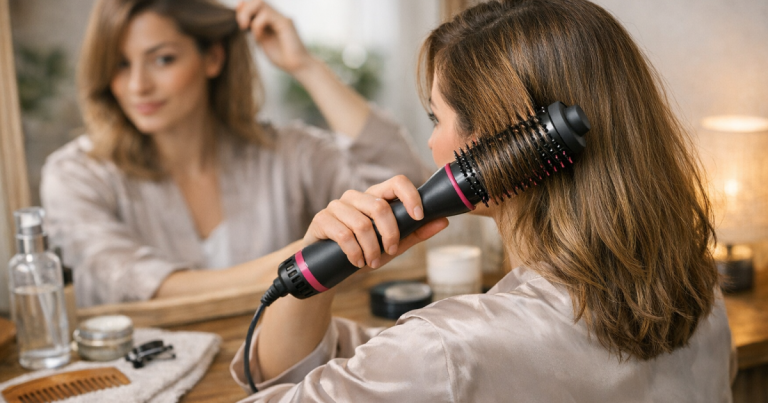
For definition without crunch or excessive heat, brush-based styling can be a gentler route for some waves and curls. The Denman D3 Original Styler review is a useful next read if you are trying to encourage shape rather than flatten fragile lengths.
Things readers ask
Can I turn the GHD Platinum+ down for damaged hair?
No. The Platinum+ is a fixed-temperature styler, so you cannot select a lower heat setting. If your hair needs a cooler tool, use a heatless method or an adjustable straightener instead.
Is one pass always safe on fragile hair?
Not always. One pass is usually better than repeated passes, but hair that is gummy, snapping, very dry or freshly compromised may still be too weak for direct heat.
Should I straighten fragile hair before or after serum?
Use heat protectant before styling, then add a small amount of finishing serum after the hair has cooled. Avoid applying unsuitable oils or heavy shine products immediately before using hot plates.
How do I stop the ends looking thin after straightening?
Do not clamp the ends flat. Stop slightly short, curve the styler softly under, or leave the ends with a natural bend so they look fuller and less exposed.
Can fragile wavy hair be straightened without ruining the pattern?
Occasional careful straightening should not automatically ruin waves, but frequent heat, high tension and repeated passes can weaken the pattern over time. Rotate with diffusing or heatless shaping.
The big picture
The safest way to use a premium straightener on delicate hair is to do less with more intention. Prepare the hair well, dry it fully, section according to density, glide once with light tension, and leave the weakest pieces alone. If the finish you want needs repeated correction, the method is too demanding for the condition your hair is in today.
Fragile hair does not mean you can never use a straightener. It means every pass needs to earn its place, and heatless alternatives should be part of the routine rather than an afterthought.